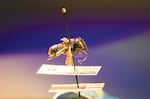
A mason bee displayed under a microscope at Oregon State University on July 15, 2025.
Eliana Cameron and Anahid Grigoryan / High School Journalism Institute
Andony Melathopoulos takes a seat and flips on the harsh light to his microscope. He places a bee under the lens and peers through, adjusting the focus for a clear view.
Melathopoulos, an associate professor of pollinator health extension at Oregon State University, is working hand in hand with volunteers and other researchers to learn more about Oregon’s native bees. They have been collecting data on where bees live and which plants they visit.
This March, they made the data they gathered publicly accessible online in an interactive database called the Melittoflora.
“You can now see clearly which bees go to which plants,” Melathopoulos said. “This is only possible in Oregon at this point. We’re the only state with this level of data … internationally, too.”
Related: New honey bee energy bar tested in Washington offers hope for struggling hives
Honeybee declines are well documented, but there is not a lot of information on native bees in Oregon or their health.
“We have evidence that a few species look to be declining, but a number of species seem to be stable,” Melathopoulos said. “Then there’s a whole long tail of bees that we have not enough information to say anything about.”

Andony Melathopoulos holds a collection of bees at the Oregon State University Arthropod Collection in Corvallis on July 15, 2025. Melathopoulos helped found the Oregon Bee Atlas in partnership with Oregon State.
Eliana Cameron and Anahid Grigoryan / High School Journalism Institute
The data used in the Melittoflora comes from volunteers who catch bees and help identify them as part of their work with the Oregon Bee Atlas, a program Melathopoulos helped launch in 2018 to collect more information on native bees. Melitta is derived from Greek and means bee. Flora refers to the atlas of plants.
When he first helped start the atlas, there was no accurate record for how many bee species were in Oregon, said Melathopoulos. Lincoln Best, taxonomist for the Oregon Bee Atlas, now estimates there are roughly 800 bee species.
He said Oregon Bee Atlas volunteers have contributed to many discoveries.
“What we have found is our volunteers are exceptionally capable, they’re very hardworking, and they’re very dedicated,” said Best. “Honestly they make discoveries like every week.”
Best trains volunteers to catch bees and help identify them.

Oregon Bee Atlas taxonomist Lincoln Best sits near a microscope at the Oregon State Arthropod Collection on July 15, 2025.
Eliana Cameron and Anahid Grigoryan / High School Journalism Institute
Scott Sublette, a 68-year-old volunteer, said he has caught and helped identify more than 6,000 bees over the past five years for the Oregon Bee Atlas.
“The day before yesterday, there were some bees making a nest in some spray foam around the outside of my house,” he said. “So I caught a couple and I ID’d them. And it’s just fun to be able to do that.”
Related: OSU researchers to lead $4.2M grant study on honeybee disease
With a net in hand, volunteers search for bees and put them in a vial of ethyl acetate. The fumes suffocate the bees.
“They die nice and quick,” Melathopoulos said.
Some attempt to identify the bees before mailing the samples to the lab at Oregon State.
Sublette sees the irony in killing bees to help save them.
“I’ve had people give me a bad time because we do lethal sampling, so we’re killing the bees,” Sublette said. “I always say go look at your bumper; you probably killed more bees driving to work today than I kill in a week.”
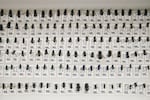
A variety of bees used for research displayed at Oregon State University in Corvallis on July 15, 2025.
Eliana Cameron and Anahid Grigoryan / High School Journalism Institute
Melathopoulos said the research that volunteers do is even more valuable now that it is accessible to the public through the Melittoflora.
There are many bees all over the state of Oregon, he said, but some parts are more populated with native bees than others. The Melittoflora allows researchers to visualize where native bees are and which places in Oregon may need the most help.
“It’s possible that the real conservation needs — like where dollars need to flow – may not be your backyard,” Melathopoulos said, “It may be somewhere a little more distant.”
This story was produced by student reporters as part of the High School Journalism Institute, an annual collaboration among The Oregonian, Oregon Public Broadcasting, Oregon State University and other Oregon media organizations. For more information or to support the program, go tooregonhsji.org.
This republished story is part of OPB’s broader effort to ensure that everyone in our region has access to quality journalism that informs, entertains and enriches their lives. To learn more, visit opb.org/partnerships.