A cyanobacteria bloom is visible along the shores of the Ross Island lagoon on the Willamette River, Aug. 15, 2025.
Evan Rodriguez / OPB
In recent years, the Willamette River has become prone to blooms of cyanobacteria, more commonly known as “blue-green” algae.
The algae can pose significant health risks for humans and pets who come into contact with it. Health officials warn that algal blooms are particularly dangerous for young children and dogs.
There are many warning signs that swimmers should be on the look out for, including:
- Changing colors including red, dark green, blue and brown.
- Density such as thick or chunky water.
- Clarity such as cloudy or hazy water.
- Unpleasant smells.
Toxins from the bacteria can be spread through contact with or by ingesting the affected water. Officials also warn that motorists could possibly inhale toxins through water spray created by high-speed vehicles like motorboats and jet skis.
Climate change and warmer waters have been blamed for an increase in algal blooms across the country in recent years. Near Ross Island, which is south of downtown Portland, old gravel mining operations have been blamed for shifting river patterns and causing patches of stagnant water where algae grows best.
This week, state officials issued a recreational use health advisory for the Willamette River to include Ross Island Bridge downriver to Wapato Bridge and Kelley Point Park.
When are recreational advisories issued?
Recreational advisories are issued when cyanotoxins have been found through testing completed by the Oregon Health Authority. There could still be dangerous toxins even if an advisory has not yet been issued.
Related: Annual algae bloom forms on Willamette River. A bill to stop it died in the Oregon House
What are the symptoms of cyanobacteria exposure?
Symptoms in humans can include diarrhea, vomiting and skin irritation. Low-level exposure to cyanobacteria can be deadly for dogs. Symptoms in dogs can include diarrhea and vomiting in addition to difficulty with walking and standing, breathing problems and loss of appetite.
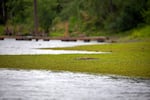
The Willamette River on the Willamette Park Waterfront, reported to have traces of harmful cyanobacteria, also known as blue-green algae in Portland, Ore., Aug 15, 2025. A health advisory has been issues for the bacteria, warning against humans and pets swimming in the affected waters.
Morgan Barnaby / OPB
Is it safe to fish and boat during a cyanobacteria bloom?
Water spray from boats and jet skis can pose a risk for inhalation of toxins. Boaters should avoid driving at high speeds in algae areas to avoid airborne exposure.
According to the Oregon Health Authority, fish caught in affected water could pose health risks. Consumers are encouraged to remove skins, fat and organs where toxins would most likely build up.
For more information on cyanobacteria blooms, visit OHA’s website for health recommendations and ways to stay safe against the harmful algae blooms.
Clarification: This story has been updated to reflect the revised recreational use health advisory for the Willamette River, issued on Aug. 13, 2025.