Most public testimony submitted about the proposed transportation bill lawmakers are considering this special session has been in opposition to the bill, with many Oregonians writing to lawmakers that they want “no new taxes.”

The proposed transportation package would only raise the transit tax, which goes toward the State Transportation Improvement Fund.
Courtesy of Oregon Department of Transportation
Lawmakers are considering passing a transportation package that would raise $4.3 billion over the next 10 years by raising the gas tax by 6 cents, increasing vehicle title and registration fees and temporarily raising a statewide payroll tax for transit from 0.1% to 0.2%.
House Minority Leader Christine Drazan, R-Canby, in a Facebook post called the legislation the “largest transportation tax hike in Oregon history.
“If you work in our state, your payroll tax is doubling in this measure, which means you’re going to take home less to your families every single week,” Drazan said in a Facebook video.
To put that into perspective, the Oregon Capital Chronicle has compiled a detailed breakdown of how much the payroll transit tax would cost Oregonians.
How does the payroll transit tax work?
“Payroll tax” is a general term for what’s taken out of your paycheck for tax purposes or social services. For Oregonians, this includes state and federal income tax, social security, Medicare, a workers fund tax, a paid leave tax and a transit tax.
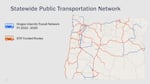
Intercity transit networks, shown in blue, provide long-distance bus services across the state, largely connecting rural communities with cities. The red lines represent routes funded by the Statewide Transportation Improvement Fund program. Examples in the most recent grants include the Eugene-Florence-Yachats connector and the bus line from Bend to Klamath.
Courtesy of Oregon Department of Transportation
The proposed transportation package would only raise the transit tax, which goes toward the State Transportation Improvement Fund. The fund started in 2018 to invest in public transportation improvements across the state. It provides free or reduced public transportation for students, rural and low-income Oregonians.
Oregonians pay $1 out of every $1,000 of their wages to this fund. If the bill passes, that would double to $2 for every $1,000 between January 2026 and January 2028.
So what would this cost the average Oregonian?
A worker making the average Oregon salary of about $68,000 already pays $68 per year, or $5.60 per month, out of their paycheck toward the state’s public transportation fund. This would double to $136 per year, or $11.20 per month.