Cattle ranchers in Oregon and across the nation have found their work in the national spotlight with policy proposals from the Trump administration that have drawn both outrage and skepticism from industry groups.
One proposal, which has drawn national headlines and pushback from U.S. cattle industry groups, would import beef from Argentina to lower prices at the grocery store. The other seeks to open more public lands to cattle ranching and has drawn more mixed reviews.
“The announcement of both things just happened to be at the exact same time,” said Matt McElligott, the president of the Oregon Cattlemen’s Association and a North Powder rancher.
Earlier this month, the Trump administration released its plan to support domestic cattle ranchers. Industry groups and government officials say it had been in the works for several months. The plan calls for opening up more public lands for grazing and Endangered Species Act adjustments, among other changes.
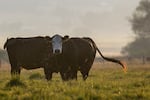
Cows in a field along Highway 30, just south of Baker City, Ore., July 30, 2024.
Anna Lueck / OPB
The Oregon Cattlemen’s Association expressed some skepticism but sees some upsides. Wildlife and conservation groups say the plan would benefit only a handful of politically connected producers at the expense of the environment.
“There seems to be a big focus here on further handouts to public lands grazers,” said Adam Bronstein, the Oregon director for the Western Watershed Project, a nonprofit conservation group.
When the U.S. Department of Agriculture released a 13-page plan to “strengthen” the U.S. beef industry, McElligott said he was unconvinced at first.
“I’m skeptical of government intervention in any market. That’s my first impression,” he said. “Then I read the plan, pulled it apart, looked at it, and thought there’s some good stuff in there.”
The plan would open up more than 24 million acres of vacant grazing allotments that are managed under the Bureau of Land Management and the U.S. Forest Service across much of the Western United States.
It also proposes to “streamline and expand” the permitting process for ranchers to graze their cattle on public lands by bypassing environmental review regulations, and also includes new predator compensation standards — payments producers can get for livestock they lose to wolves, coyotes or other predators.
In Oregon and Washington, the Bureau of Land Management oversees cattle grazing permits for about 14 million acres of public rangelands. Cattle make up over half of Oregon’s livestock revenue, with annual sales of $1.2 billion.
USDA officials say opening up vacant lands for grazing is a form of land management, and it would allow ranchers to grow their herds.
“At Interior, the Department is slashing red tape and restoring grazing access on public lands to support the livelihoods of hardworking Americans in the ranching industry,” said Doug Burgum, the Secretary of the Interior.
McElligott said not all lands will likely be viable for grazing; some are too rocky or steep. But, he said, it will help.
“I would foresee some of these vacant allotments being given priority to young ranchers and veteran ranchers. That’s kind of where I see this going. I may be wrong,” he said. “And that helps them get into the business. And helps them become lifelong ranchers.”
‘There’s been minimal oversight over the decades’
But wildlife and conservation groups don’t see it that way.
Adam Bronstein with the Western Watersheds Project said the government is supposed to balance protections for species like elk and deer and threatened or endangered animals. Opening up vacant lands could damage habitat and ecosystems for wildlife, he said.
“These vacant lands are incredibly important for wildlife and ecosystem health and climate resiliency,” he said. “They act as a sort of a baseline for us to understand how lands are responding post-grazing and through recovery.”
He said cattle are disruptive to wildlife ecosystems and have contributed to the proliferation of invasive grasses like cheatgrass and Medusahead rye, which tend to dry earlier in the summer season and spark wildfires.
“You just enter into this vicious cycle of cheat grass expansion after soils are disturbed by hooves,” he said. “Cheat grass thrives on this disturbance. When you get these fires, cheatgrass is very flammable and flashy.”
Bronstein added that even as the USDA proposes opening up more land for grazing, the agency’s own data suggests that it is unable to manage the active allotments already in use. He pointed to a report published by the Western Watersheds Project and Public Employees for Environmental Responsibility.
That report found that in Oregon, the Bureau of Land Management had allowed cattle to graze on 5 million acres of federal land that did not meet the state’s own rangeland health standards. And most areas were overgrazed or had been renewed for grazing without any environmental analysis, Bronstein said.
“There’s been minimal oversight over the decades, it’s gotten so much worse,” he said.
McElligott said he disagreed with that notion and that ranchers would still be required to follow environmental and land management rules set by the federal agencies.
“They [environmental groups] have advocated for no grazing on any public lands for years,” he said. “And that’s their mantra. And if they move away from that, they would lose their base, which is their income.”
While cattlemen say opening up rangeland could create new opportunities for young ranchers, Trump’s other recent policy proposal could make it harder for them to make a profit.
Earlier this month, the president suggested importing beef from Argentina to lower the price for consumers at the grocery store. The announcement was not well received among cattle industry groups, many of whom say the idea is misguided and would undercut American cattle ranchers.
“We oppose this kind of government intervention in the marketplace and will continue to defend ranchers from this action,” said Justin Tupper, the president of the United States Cattlemen’s Association, in a statement.