It’s Whale Watching Week in Oregon, which means coastal visitors will get the chance to spot gray whales as they swim north to their Arctic feeding grounds.
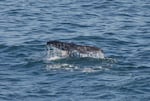
Whale Watch Week returns to the Oregon Coast. Undated file image.
Courtesy of Oregon State Parks / Courtesy of Oregon State Parks
Each winter, gray whales travel to the warm tropical waters of Baja California, Mexico where they reproduce and raise their calves. In the spring, they migrate north to Alaskan waters where they spend the next five to six months eating enough crustaceans along the ocean floor to energize them for the remainder of the year.
“It’s the longest migration of any mammal on the planet,” said Josh Stewart, an assistant professor at Oregon State University’s Marine Mammal Institute.
But as much as tourists come from worldwide to gather along Oregon’s cliffs and shores to whale watch, these beloved marine mammals aren’t immune to the impacts of climate change.
Scientists say fewer whales may swim by compared to prior years. In 2025, scientists estimated the eastern North Pacific gray whale population was at about 13,000. That’s the lowest number since the 1970s — the decade when they were listed as an endangered species. Gray whales have since been delisted, but reproduction among the species remains low, according to the National Oceanic and Atmospheric Administration.
While gray whale populations have historically fluctuated with natural cycles in food availability, the ongoing decline is lasting longer than normal and scientists have seen fewer calves since 2019, Stewart said.
That’s because the Arctic sea ice, which helps store nutrients that sustain the crustaceans whales eat, is melting earlier in the year — disrupting the food chain whales depend on.
“These feeding areas that they migrate such long distances to are warming four times as quickly as the rest of the planet on average, and that’s having a major impact on their prey availability,” Stewart said.
For more information about Whale Watching Week in Oregon, visit the Oregon State Parks website.
Other impacts, including ship strikes and entanglement in fishing gear, pose threats to whale populations.
“This distant Arctic ecosystem that’s warming is impacting species that we care about, that are economically valuable for our coastal communities and that pass right by our shores,” he said.
Each year, the Oregon Parks and Recreation Department helps tens of thousands of visitors learn about gray whales during Whale Watching Week, which began Saturday and ends March 29. From Astoria to Brookings, volunteers and park rangers between 10 a.m. to 1 p.m. are stationed at 15 locations across the coast to help spot whales and answer visitor questions.
“Spring is a great time for whale watching because the gray whale migration can be a bit closer on their return trip north, usually within a few miles from shore,” Oregon State Park ranger Peter McBride said in a statement. “As we get later into the spring, we can sometimes see the mothers with calves in tow.”
Oregon Capital Chronicle is part of States Newsroom, a network of news bureaus supported by grants and a coalition of donors as a 501(c)(3) public charity. Oregon Capital Chronicle maintains editorial independence. Contact Editor Julia Shumway for questions: info@oregoncapitalchronicle.com. Follow Oregon Capital Chronicle on Facebook and Bluesky.
This republished story is part of OPB’s broader effort to ensure that everyone in our region has access to quality journalism that informs, entertains and enriches their lives. To learn more, visit opb.org/partnerships.