The entire U.S. West Coast is under tsunami advisories or warnings Tuesday evening, after a massive 8.8 magnitude earthquake sent shockwaves across the land and sea several hours earlier.
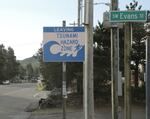
Tsunami warning sign, Depoe Bay, Jan. 13, 2025
Kristian Foden-Vencil / OPB
Large waves could start lapping at some parts of the Oregon and Washington coastlines as early as 11:30 p.m., according to estimates from the National Tsunami Weather Center. In other areas, the biggest waves won’t arrive until closer to 2 a.m. Wednesday morning.
At around 8:30 p.m. Tuesday, the tsunami weather center elevated its risk assessment of the Oregon-California border to the most severe tsunami threat level, a warning, which means dangerous coastal flooding and powerful currents are possible.
Weather officials forecast waves of up to about a foot and a half in Brookings and Port Orford, and less than a foot at Charleston, Oregon, all starting roughly between 11:30 p.m. and midnight. They also said people should expect strong currents.
That may not sound like much, but the National Weather Service says even small tsunamis can be dangerous. Tsunamis often roll in faster than people can run. It takes less than six inches of fast-moving water to knock down an adult on foot, and two feet of water can carry away a vehicle.
“Do not go to the coast to watch the tsunami,” staff with the weather service’s Medford office said in a written statement posted online Tuesday. “Move off the beach and out of harbors and marinas.”
The rest of Oregon, Washington and California were under an advisory, the second-highest tsunami alert level, which means people should stay out of the water and away from beaches and waterways, and should expect strong currents and potentially dangerous waves.
Here’s when large waves might reach destinations along the West Coast, according to tsunami center estimates:
- 11:45 p.m. Tuesday: Long Beach, Washington
- 11:50 p.m. Tuesday: Brookings, Oregon
- 11:55 p.m. Tuesday: Seaside and Newport in Oregon, and Crescent City in California
- 12:40 a.m. Wednesday: San Francisco
- 1:05 a.m. Wednesday: Los Angeles Harbor
- 2 a.m. Wednesday: Tacoma, Washington
A full list of when large waves might arrive on the West Coast is online here.
Tsunamis can arrive as a series of ocean surges for many hours, officials warn, and the first wave may not be the largest.