FILE - A 2023 Ford Mustang Mach-E charges, March 8, 2024, at an electric vehicle charging station in London, Ohio.
Joshua A. Bickel / AP
Qualified Oregonians looking to buy a new or used electric vehicle have until next month to take advantage of state rebates before funding runs out this year.
The Oregon Department of Environmental Quality announced this week it will suspend its “charge ahead” rebate on Dec. 5. The charge ahead rebate is part of the agency’s Oregon Clean Vehicle Program, which offers two rebates for qualified household incomes earning up to $304,600.
Under the program, Oregonians can receive up to $7,500 back when buying or leasing a new, qualified electric vehicle or plug-in hybrid. People can also receive up to $5,000 for a used vehicle.
The rebate is also open to nonprofits that provide services to lower-income households, such as food delivery or transportation to medical appointments.
The Oregon Clean Vehicle Program receives at least $12 million or 45% of tax collections annually, whichever is greater, from the state’s Vehicle Privilege Tax.
The program has been popular in Oregon and often runs out of funding before the year’s end. DEQ’s Erica Timm encouraged vehicle buyers seeking a rebate to buy ahead of the deadline.
“For someone to qualify for the charge ahead rebate, they must purchase or lease a new or used eligible vehicle from the time we opened, which was May 22, 2025, through Dec. 4,” she said.
For the past two years, the state’s EV rebate program has become so popular that the agency has had to suspend it due to lack of funding — in some cases, only reopening the program for a couple of months throughout the year. That popularity has helped boost EV sales across the state.
As of July, there are more than 123,000 registered EVs or plug-in hybrid vehicles in Oregon. The program, which has been running since late 2018, has issued nearly $120 million in rebates. About $45 million of those rebates were issued to charge ahead households.
This year, the charge ahead rebate program was open for a longer period of time. That’s because of a one-time $31 million federal boost from the Environmental Protection Agency’s Climate Pollution Reduction Grant program. That funding came from the Biden administration’s Inflation Reduction Act, which provided hundreds of billions of dollars toward addressing climate change.
The Climate Pollution Reduction Grant is one of the few grants left unscathed under the Trump administration, which rescinded billions of dollars in allocated funding toward renewable energy issued under the Biden administration.
According to Timm, the additional $31 million in federal funds made a positive impact for Oregonians and she expects it will double last year’s numbers.
“In 2024, the program issued about 1,500 charge ahead rebates, whereas this year, we’ve already issued over 2,000 rebates and have almost another 900 applications under review,” Timm said.
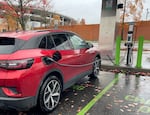
An electric vehicle charging in a parking lot.
Monica Samayoa / OPB
Despite the program’s popularity, the state did not achieve former Gov. Kate Brown’s goal of 250,000 registered EVs by 2025, and Oregon could begin to see a decline in EV sales.
With the passage of the Trump administration’s 2025 spending bill, federal incentives for people who purchased electric vehicles ended Sept. 30. That caused a flurry of people across the nation on the fence about buying an electric vehicle to make the purchase, including boosting sales here in Oregon, Timm said.
“The trend was that late August [and] September were really busy as far as the number of applications coming in for both the rebate itself and our charge ahead pre-qualification application,” she said when asked about people taking advantage of both federal and state incentives.
Without the federal incentives, buying an EV is likely to become more difficult for some Oregonians. Average prices for a new EV start around $30,000 and can reach beyond $100,000 for luxury vehicles. Early data show that EV sales across the country dropped significantly in October, signaling the importance of incentives for consumers.
Another obstacle: Some American auto manufacturers have started to shift their focus away from electrifying their whole fleet of vehicles. While others are laying off their EV workforce.
“The Oregon Clean Vehicle Rebate Program remains one of our most effective tools for helping Oregon residents switch to cleaner transportation,” DEQ Air Quality transportation strategies section manager Rachel Sakata said in a statement.
Despite those changes and the loss of the federal incentive, Timm said Oregon will continue to offer state incentives for EVs. The program will resume next year when the state refills its funding.
“People have seemed interested in participating in our program and so we haven’t lacked for applicants to date,” she said. “We’ve had to close early the last couple of years and so we’ll continue watching what that means.”
Next week, DEQ plans to hold a committee meeting for the Oregon Clean Vehicle Rebate Program. The focus of the rulemaking will be financial sustainability and potential adjustments on what is and isn’t working, Timm said.