With hundreds of natural species under threat statewide — fish, insects, bighorn sheep and more — the Oregon Legislature has voted to increase the state’s lodging tax to pay for wildlife conservation.
The state Senate voted 20-9 on Wednesday to pass House Bill 4134, hiking taxes on stays at hotels, campgrounds and vacation rentals from 1.5% to 2.75%. The bill passed the state House of Representatives last week.
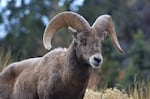
FILE - A bighorn sheep ram in Baker County, Ore. A tax approved in the state Legislature would fund support for natural resources, including animals like the bighorn.
Baker County Tourism Travel Baker County / Flickr Creative Commons
“We cannot afford to take these landscapes for granted,” said Sen. Janeen Sollman, D-Hillsboro. “Put simply, this is good economic policy. Outdoor recreation is a $16.2 billion industry, and at its heart are the wildlife and the habitats that draw people here in the first place. We have been failing to invest in their recovery. This bill corrects that.”
The tax will kick in next year and is projected to raise nearly $37 million in revenue per fiscal year. The funds will go to a number of state programs to support Oregon’s wildlife, including those aiming to curb poaching, invasive species and wildfire.
The bill passed through the Legislature with bipartisan support, receiving Republican backing in large part because it would funnel millions of dollars toward helping ranchers whose cattle are killed by wolves.
Sen. Todd Nash, R-Enterprise, who supports the legislation, said he has been trying to address this issue and find permanent funding for it for years.
“This is not sustainable,” Nash said. “It’s not sustainable for the ranching industry. It’s not sustainable for the mental health of my ranchers who suffer, stay up nights. It is impacting their family and their bottom line.”
The bill elevated a debate over whether the state should lean on tourism to help pay for its natural resources. Although a small group of Republicans supported it, most party members opposed increasing taxes, arguing that the state should instead pull money from its general fund.
“It’s extraordinarily frustrating to be here,” said Senate Republican Leader Bruce Starr of Dundee. “It seems like the automatic go-to is just to ask taxpayers to pay more money.”
Groups representing restaurants and businesses opposed the legislation, saying it could hinder economic growth. Opponents — including Oregon Business & Industry, the Oregon Restaurant & Lodging Association and a slew of local chambers of commerce — said in a letter opposing the tax hike that the bill “will harm Oregon’s businesses and competitiveness.”
“We’re just going to take another bite out of Oregonians and a bite out of the tourists,” said Sen. Noah Robinson, R-Cave Junction.
HB 4131 received support from an unlikely alliance of environmentalists, hunters and cattlemen, who have often butted heads in Salem.
Increasing the tax would “create an important source of dedicated funding to sustain our wildlife, wildland, and recreation economy — all while keeping Oregon’s lodging tax one of the lowest in the country,” said a letter of support signed by groups including the Oregon Hunters Association, Oregon Wild and fishing groups.
The tax’s backers said it was a relatively small offering to help state wildlife programs that have lacked a consistent source of funding. Those programs rely heavily on hunting and fishing license fees. Investing in Oregon’s nature promises to bolster economic activity, particularly in rural communities, they said.
“For as long as I’ve been here, colleagues, we’ve known what to do about the dramatic slide of wildlife health,” said Sen. Jeff Golden, D-Ashland. “But we haven’t done it.”
The bill now awaits Gov. Tina Kotek’s signature.