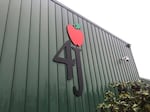
FILE - Undated photo of Eugene 4J School District's headquarters.
Brian Bull/KLCC
Eugene Education Association President Jamie Myers described her district as “truly a special place,” where students have access to rich, high-quality educational opportunities. But with each budget cut and program reduction, she said that vision becomes harder to sustain.
“The scope of the cuts planned for next year is significant, and their full impact may not yet be entirely understood,” Myers said, speaking to the 4J school board Wednesday evening. “However, as we begin to see the effects take shape, and as additional reductions are anticipated in future years, it raises an important question: where and when will we draw the line?”
The school board unanimously voted at a work session Wednesday evening to adopt the proposed 2026-27 budget, totaling $531.9 million. The balanced budget comes after addressing a $46.4 million deficit, largely through cuts to staff, services and programs, and the use of one-time funds. The budget includes a small buffer to cover staffing adjustments in the fall.
Superintendent Miriam Mickelson said the budget reflects a series of “necessary but painful decisions,” and she, like others, has lingering concerns about how well their daily operations will work with fewer people.
Board members thanked those in the community who collaborated with the district to improve this year’s budget proposal, coming up with what they called creative solutions to keep things like music classes in the mix.
“It really bears repeating that these reductions are not abstract budget decisions,” Mickelson said. “They have far-reaching personal and professional consequences for our staff” — staff, who, she said, have strengthened the district in ways that “cannot be fully reflected in a budget document.”
Myers, an elementary teacher herself, acknowledged how declining enrollment and a growing lack of affordable housing are affecting the 4J community. At the same time, she worries cuts like these will drive remaining families to search for alternatives.
“While I do not have all the answers, I do believe strongly that this moment calls for collective action,” she said. “We must work together to advocate for increased and more stable school funding at the state level.”
Myers reminded the board of May 2019, when thousands of educators gathered at the Oregon Capitol — along with tens of thousands more statewide — to call for investment in the Student Success Act, a dedicated stream of state funding earmarked solely for education.
Looking to the next legislative session, Myers argues lawmakers need to identify other meaningful solutions. She gave an example: drawing from the state’s Education Stability Fund.
“We need to stand shoulder to shoulder with our neighbors across professions and throughout our community,” she said, “to advocate for the resources our students deserve.”
Natalie Pate is a reporter with KLCC. This story comes to you from the Northwest News Network, a collaboration between public media organizations in Oregon and Washington.
It is part of OPB’s broader effort to ensure that everyone in our region has access to quality journalism that informs, entertains and enriches their lives. To learn more, visit our journalism partnerships page.