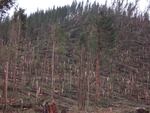
Extensive damage to trees was a common sight following the December 2007 storm. This forest on Highway 26 near the Coast was heavily damaged.
Oregon Department of Fish and Wildlife
PORTLAND -- Oregon's Environmental Quality and Forestry departments are calling for precautionary steps to prevent flooding rivers and saturated hillsides from wreaking ecological havoc.
Several storm fronts are predicted to hit the Northwest this week, packing freezing temperatures, high winds, and enough rain to flood streams and rivers. The state Department of Environmental Quality's advice:
Secure containers of chemical products and hazardous materials, along with any other loose waste materials or other items that could be driven into waterways or harm wildlife or storm-response crews.
Move items to higher ground if possible and utilize shelving that will likely remain above the flood line.
If you observe a release or a threatened release of hazardous materials, call the Oregon Emergency Response System at 1-800-454-0311.
Once the storms pass, the Oregon Department of Forestry is urging forest landowners in Northwest Oregon to assess tree damage and natural hazards that have resulted from the whipping winds and heavy rains. Thirty-five percent of the state's 30.5 forest acres in private ownership. For these owners, the department is urging special post-storm attention be paid to:
Downed trees, which can cause safety threats such as flooding of buildings or damage to bridges and must be reported to the ODF within 24 when they fall on forestland, it says. Blown down trees sometimes land in streams – a natural process that actually helps create better habitat for salmon and other fish species.
Forest roads, which landowners are asked to assess to make sure remain intact. During wet weather, heavy equipment or log hauling from private and state-owned forests may be suspended if road conditions cannot prevent surface runoff from reaching streams.
Detection of land shifts and hazards. Wet rugged terrain is prone to landslides on both logged and managed forests and those left as wilderness. People living in potential debris flow areas, such as near a canyon mouth or at the base of a steep slope are asked to pay special attention for signs of hazard: unusual sounds such as cracking trees, sudden water flow increases, or water accumulation in abnormal places.
Water Hazards. Clogged road culverts can create potential for debris flow once impounded water is freed. Forestland owners are being asked to watch for suddenly muddy water or a sudden change in the amount of water flowing.