One hundred sixty years ago, the S.S. Brother Jonathan sank just south of the Oregon border in what remains one of the region’s deadliest maritime disasters. Over 200 people and a treasure trove of gold coins went down with the ship.

This image, circa 1865, shows a drawing of the S.S. Brother Jonathan with an inset map showing the location of the wreck.
Courtesy of the Oregon Historical Society, Album 353
On July 30, 1865, the side-wheel steamer Brother Jonathan departed Crescent City, California, and headed north toward Portland on its usual route up and down the West Coast.
It would be the ship’s final journey.
According to Captain Samuel DeWolf’s widow, the ship’s captain had been worried about the latest northbound journey.
“— Maria DeWolfThe night before they were to leave, the officers and many of the crew met with the Captain in the saloon to converse the situation and decide whether to leave in a body or take their chances of going to the bottom.”
A recent collision in Portland’s harbor had damaged the heavily used ship. In addition, DeWolf reported that her husband had expressed concern to the ship’s owners that the vessel was overloaded with too much cargo. Despite the warning, the ship set sail on schedule.
A ‘North’wester’ strikes
Soon after leaving the harbor, a fierce summer storm unexpectedly formed out of the blue skies.
Locals called these strong northern winds a ‘North’wester.’
Gale winds created giant rolling waves that pounded over the bow of the 220-foot-long ship.
According to an official inquiry, the captain called for the ship to turn back. The call came too late. A mountainous wave lifted the boat out of the water and tossed it onto an uncharted rock just below the water’s surface. The collision impaled the ship and left its side ripped open.
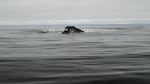
This screenshot shows the rock that sank the Brother Jonathan steamship in 1865. It is now known as Jonathan Rock.
Dan Evans / OPB
As the wheeler jolted to a sudden stop, passengers tumbled to the floors of their cabins.
Within minutes, Captain DeWolf made the call to abandon ship.
“— Mina Bernhardt, 1865 shipwreck survivorI was suddenly startled by a fearful shock, followed by the labored rolling of the ship, a creaking of her timbers and the distinct roar of rushing water.”
A West Coast Titanic
The paddle-wheeler traveled a regular route from British Columbia to Portland, Crescent City and San Francisco. The steamer shuttled merchandise between ports, transporting heavy mining and farming equipment along with household items and hundreds of gallons of whiskey, among other things.
The accommodations included luxury suites for the highest-paying customers and crowded, dark bunks for the much cheaper steerage class.
Passengers included miners headed to the latest gold rush area, merchants ferrying wares between port cities, families visiting far-off relatives or settling into expanding frontiers, and a few adventure seekers exploring the Far West.
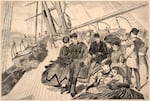
This image called "Homeward Bound" comes from an 1867 issue of Harper's Weekly. It illustrates steamship passengers from the era of the Brother Jonathan shipwreck.
Lea Christiano Photographer / Smithsonian American Art Museum
Most go down with the ship
Less than an hour after hitting the rock, the Brother Jonathan, along with most of its passengers, crew and cargo, disappeared under the waves.
The exact number is unknown, but most estimates place it at around 240 people.
“— Mina Bernhardt, 1865 shipwreck survivorI seized my child with one hand and, grasping a life preserver with the other, I ran upon the deck. When reaching the deck I saw one of the boats already lowered and was full of ladies...and in the same instant, the steamer careened and upset the boat, engulfing all in a merciless wave.”
According to eyewitness accounts, crews scrambled to launch lifeboats, but waves tossed the small crafts — dumping passengers into the frigid water.
Only one small wooden boat managed to escape the disaster, taking just 19 people to safety. Eleven were crew members. Those who survived included eight women and children. Two were listed only as “Chinese woman and child.”
“— Mary Ann Tweedale, 1865 shipwreck survivorA Chinese woman was helped in with her child. Her husband asked to get in, but was repulsed. He begged hard, but the sailors were firm. The parting between husband and wife was enough to wring even the hearts of those whose only emotion was that of self preservation.”
For months, bodies washed up along the shores of Northern California and Southern Oregon.
Many could not be identified and were buried in local cemeteries. Crescent City residents erected a memorial in their honor.

This is the only known image of the S.S. Brother Jonathan. It shows the steamship sitting in the San Francisco harbor, probably in 1863.
Courtesy of the San Francisco Maritime National Historic Park
Treasure ship
The ship was well known for carrying gold. At the time, paper money was rare along the West Coast.
Passengers might hold their entire net worth in gold coins or ingots, often stored in the purser’s safe.
Along with the passenger’s personal money, the ship also transported payrolls for federal military troops and Native American reservation payments. According to legends, the safe also held millions in gold bars.
Salvaging gold and artifacts
In the 1990s, salvagers finally discovered the sunken ship, about six miles off the coast of Crescent City. Over the course of several deep-sea explorations, divers recovered numerous artifacts, including more than 1,200 gold coins.
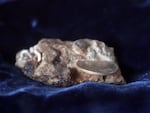
This screenshot shows a five dollar gold coin from the Brother Jonathan shipwreck, on display at the Del Norte County Historical Society Museum.
Dan Evans / OPB
Many of the artifacts recovered from the shipwreck are now housed at the Del Norte County Historical Society in Crescent City.
That includes a five-dollar gold piece recovered during the salvage operations.
The rest of the gold became the subject of a drawn out court battle.
Ultimately, the State of California received 20 percent of the finds, or approximately 200 gold coins. Most of the remaining gold was auctioned off to pay the salvagers’ bills.
Today, the wreck site is listed on the National Register of Historic Places. It is protected by the government, and all salvage efforts have halted, at least for now.
The ship and any treasure remain at the bottom of the Pacific Ocean just off the Southern Oregon and Northern California coast.

BEHIND THE SCENES
Recently, OPB cinematographer Dan Evans and I traveled to Crescent City, California to visit the Del Norte County Historical Society and to see the infamous rock that took down the S.S. Brother Jonathan.
I tend to get seasick, so I wasn’t looking forward to the boat ride. Not to mention, we planned to travel to the same rocky outcroppings that had sunk a 220-foot ship. Fortunately, we had perfect conditions. The ocean was smooth as glass, and an exceptionally low tide exposed the once uncharted rock — now known as Jonathan Rock. We even got to see whales!
Our trip was for a half-hour Oregon Experience documentary we are working on about the Brother Jonathan. The shipwreck and the gold treasure are interesting, but there is so much more to the story. I am currently researching and conducting interviews, which are some of my favorite parts of the job. I am really looking forward to sharing it all with you soon.

OPB cinematographer Dan Evans on the Onyx, with Captain Harry Adams, outside of Crescent City, California.
Kami Horton / OPB