

Looking for the rest of the Superabundant newsletter?
Subscribe now to get original recipes, PNW food news, and ideas for the kitchen and garden!
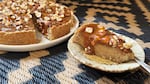
This alternative to time-worn pumpkin pie is made from a few surprising substitutions
Heather Arndt Anderson / OPB
Mock apple pie turned stale crackers into fruit during the Civil War’s food shortages, mock turtle soup (popular in the Gilded Age) made calf’s head into a luxury and mock duck or abalone made of textured wheat gluten are age-old, Buddhist-friendly alternatives.
These dishes might sound unusual today, but they were once completely ordinary dishes meant to make an out-of-reach delicacy available to the masses. But why should “mock” foods be limited to Ye Olde-Tyme Era? Why should meat be the only food we substitute with plant-based analogs?
This is all a roundabout way of saying that I got the idea to turn sticky, caramelly, roasted camas bulbs — an Indigenous confection with thousands of years of history in our region — into a Thanksgiving pie and am dragging you along for the ride.
Unfortunately, not only are camas bulbs a wild-foraged ingredient requiring a trek to the Valley’s palustrine meadow, but they’re not even in season right now. Clearly, this is a job for creative mockery (and a little organic chemistry). Necessity isn’t the only mother of invention — sometimes creativity is borne of regular-old envy too.
By slow-roasting camas bulbs for days in an earth oven, the inulin (an indigestible fiber also found in onions and sunchokes) is converted to fructose, a simple sugar. Thanks to our old pal the Maillard reaction, that same earthy-sweet stickiness can be created in any number of starchy foods, no roasting pit required.
I find that a mix of roasted parsnips and chestnuts brings both that earthy-sweetness and the nutty complexity of roasted camas bulbs. The slightly smoky bitterness of slow pit-roasting comes from a tiny bit of molasses and alder-smoked salt. And to invoke the cinnamon-y coumarin notes naturally found in black cottonwood sap, sweet clover and sweet vernal grass (plants traditionally used throughout the Northwest for flavoring foods), a blend of cassia, vanilla and almond extract.
A hazelnut crust felt like the right base for this, and a topping of gooey caramel sauce and roasted hazelnuts sounds good on just about everything, but whipped cream would be just as nice. Makes 1 tart
Note: You will need a food processor or blender for this recipe.
Ingredients
Crust
1 cup roasted, unsalted hazelnuts
1 cup all-purpose flour
2 tablespoons sugar
½ teaspoon fine sea salt
½ cup (1 stick) cold, unsalted butter, cut into small pieces
3 tablespoons ice water
Pie filling
2 pounds parsnips (smaller ones are best), peeled and cut into 1-inch chunks
2 tablespoons maple syrup
1 5.2-ounce pack of peeled, roasted chestnuts (~20 chestnuts)
5 tablespoons unsalted butter
1 14-ounce can evaporated milk
¼ cup honey
⅔ cup sugar
1 teaspoon molasses
2 eggs
2 teaspoons cinnamon
¼ teaspoon nutmeg
¼ teaspoon fenugreek
1 teaspoon vanilla
1 teaspoon fine sea salt
Caramel-hazelnut topping
1 cup sugar
6 tablespoons unsalted butter, cut into pieces
Few pinches fine sea salt
½ cup heavy cream
½ cup roasted, unsalted hazelnuts, coarsely chopped
Flaky sea salt
Instructions
- Roast the parsnips: Preheat the oven to 400 F and line a rimmed baking sheet with parchment. Arrange the parsnips in a single layer and drizzle on the maple syrup. Loosely cover with foil and roast until the parsnips are tender and beginning to turn golden (but not browned), about 30 minutes. (Give the pan a stir or shake in the middle of roasting so everything cooks evenly.) Reduce the oven temp to 350 F.
- Make the crust: While the parsnips are roasting, pulse the hazelnuts, flour, sugar and salt together until you reach a fine, crumbly mixture. Add the butter and pulse again until it’s well combined into the crumbly mix, then add the ice water and pulse a few more times until the mix looks a little more sticky. It will still be crumbly but should stick together if you squeeze a little with your fingers.
- Press the crumbly mix into a 10-inch springform pan or high-rimmed tart pan as tightly as you can — you want the crust to be about ⅛-inch thick with the rim 2 inches high. Park the crust in the fridge to chill while you make the pie filling.
- Make the pie filling: When the parsnips are done, add them along with the chestnuts and butter to the bowl of a food processor. Pulse a few times to get a coarse mixture, then add the remaining filling ingredients and blend on high speed until you have a smooth paste. It will be about as thick as mashed potatoes.
- Scrape the thick filling into the prepared crust and smooth the top. (Note: You might not be able to fit all the filling into the crust, but you can add any leftover filling to pancake batter or freeze it for another use.) Bake until the top looks slightly drier and darker golden and the crust has browned, about 50-60 minutes. Open the sides of the springform pan or remove the tart from the tart pan and allow the tart to cool for about an hour.
- Make the caramel: In a heavy-bottomed saucepan over medium heat, cook the sugar, stirring constantly, as it clumps and crumbles and then finally melts into a brown caramel, around 5-7 minutes.
- Turn the burner to low, and whisk in the butter until it’s fully blended (it’ll spatter a bit but be brave! If it seems to separate, just keep whisking until it submits — it will). Carefully whisk in the cream until it’s fully incorporated. Increase the heat to medium and continue stirring and cooking for 1 minute.
- Spoon the hot caramel over the cooled tart as you see fit (store leftover caramel in a jar with a lid), sprinkle on the hazelnuts and finish with a few pinches of flaky sea salt.