

Looking for the rest of the Superabundant newsletter?
Subscribe now to get original recipes, PNW food news, and ideas for the kitchen and garden!
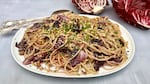
This creamy pasta tempers radicchio’s bitterness with ease
Heather Arndt Anderson / OPB
The Culinary Breeding Network’s Sagra del Radicchio + Cider event is this weekend (sorry, it’s sold out) so we’re rolling out another way to use this stunning crop. This week’s Superabundant recipe comes from chef Meredith Molli at La Medusa Restaurant (and sister restaurant Persephone) in Seattle. You may recognize it — Culinary Breeding Network founder Lane Selman prepared it in our Radicchio episode.
The recipe calls for the maroon Chioggia variety of radicchio (which originated in the coastal Italian town of the same name), but if you have a Treviso or Castelvetrano (for example) that needs eating, feel free to use other cultivars instead. When it comes to fancy vegetables, it helps to see them like edible Pokémon — gotta try ‘em all. Serves 4.
Note from chef Meredith:
If you boil your pasta in the radicchio blanching water, it picks up a subtle purple hue. You can swap in another radicchio or chicory for Chioggia, but only the purple types—think Treviso or Verona—will tint the pasta. And even if you’re anchovy-averse, don’t skip them here. They dissolve beautifully into the warm olive oil, disappearing into the sauce while delivering the deep, essential umami that makes this dish sing.
Note from Heather: Because of the recall on shredded and grated cheeses (and also in general, for quality), you’ll be better off shredding your own Pecorino.
Ingredients
Salt
1 medium head Chioggia, core attached, cut into wedges
1 pound dry spaghetti
3 to 4 tablespoons extra virgin olive oil
5 or 6 oil-packed anchovy fillets, chopped
1 large garlic clove, finely minced or sliced
¼ cup walnuts, gently toasted until fragrant and finely chopped, plus more for garnish
¼ to ½ cup heavy cream
Pinch of crushed red pepper
Zest of ½ lemon
¼ cup finely grated Pecorino
¼ cup chopped flat-leaf parsley
Salt and freshly ground black pepper
Instructions
Bring a 4- to 6-quart pot of salted water to a boil. Add the radicchio and blanch until just softened yet still bright, about 1 minute. Using a strainer or tongs, remove the radicchio to a cutting board (saving the water in the pot), remove the cores, and roughly chop. (The radicchio will eventually turn brown—a reality of cooking with many purple and red vegetables — but the pigment in the water will make your pasta and sauce a lovely purple color.) [Note: Tossing the cooked radicchio with a squeeze of lemon juice will reduce this — just use the lemon half that you already zested. — Heather]
Return the pot to a boil and add the pasta.
Meanwhile, in a separate large sauté pan over medium-low heat, heat the olive oil and add the anchovies and garlic, being careful not to brown them. After about 1 minute, add the chopped walnuts and continue cooking until the entire mixture is fragrant, about 1 minute more.
Add the chopped radicchio, stir, and add a big splash of pasta water to stop the toasting. Add the cream and bring the mixture to a gentle simmer, tossing frequently to continue cooking the radicchio and coat everything with the creamy sauce. After 2 or 3 minutes, when the sauce is reduced to coat the radicchio, turn off the heat and set aside until the spaghetti is cooked al dente.
Drain the pasta, reserving some cooking water. Turn the heat to medium-high under the radicchio pan and add the pasta with a splash of pasta water and a splash of cream if needed to loosen the sauce. Heat for another couple of minutes, moving the pasta around vigorously in the sauce to finish the cooking and bring the mixture together. Season to taste with a little extra salt if needed (important: taste first, as the anchovies will contribute salt), crushed red pepper, and lemon zest.
Plate individually or on a platter, and garnish with a generous spoonful of grated Pecorino, a sprinkling of chopped flat-leaf parsley, and additional chopped walnuts. Finish it off with a couple of coarse gratings of black pepper.