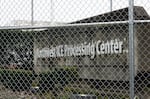
U.S. Immigration and Customs Enforcement has detained immigrants in custody at the Northwest ICE Processing Center in Tacoma since the facility's opening in 2004.
Stephani Gordon / OPB
Federal immigration arrests soared across the Pacific Northwest last year, nearly reaching historic levels, according to new data released Wednesday by the University of Washington Center for Human Rights.
Oregon saw massive spikes in immigration arrests in the fall, with the greatest increases in the Portland metro area, and Marion County.
In Washington state, apprehensions increased steadily throughout the year, with the largest uptick in Clark, Yakima and King counties.
Between October and December, 1,174 people were detained in Oregon and 951 were detained in Washington, the report states.
The dataset is the first publicly released to show the increase in immigration enforcement in the Pacific Northwest from late October through December.
Related: High-profile immigration arrests raise concern over surge by ICE
Obtaining data documenting immigration enforcement operations has been challenging, requiring litigation over FOIA requests. Organizations such as the Deportation Data Project have released huge datasets, but not since last year.
According to UW, the new data comes from I-213 forms, “which document initial apprehensions of people deemed ‘deportable’ by immigration enforcement agencies.” The data cover Oregon, Washington and Alaska immigration arrests from 2022 to 2025.
“In the Pacific Northwest migrant communities have been reporting — and this data confirms — a dramatic uptick in enforcement, and with it, mounting concerns about serious rights abuses happening on our streets and in our workplaces,” said Angelina Godoy, director of the university’s Center for Human Rights.
The Department of Homeland Security did not immediately respond to a request for comment.
Driving the spike was in part “non-custodial arrests,” which includes street arrests, the report found. In those cases, federal immigration officers used technology like license plate readers to determine a person’s “deportability.”
“This process enabled them to make an arrest within as little as 10 minutes, including of many individuals for whom they had not previously obtained a warrant and about whom they made no individualized probable cause assessment of escape risk,” researchers noted in the report.