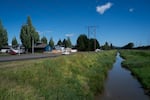
Elevated pH water flows in a ditch bordering a neighborhood across the street from the Nippon Dynawave Packaging Co. after the chemical disaster in Longview, Wash., on May 27, 2026. Signs warning of the contamination were posted on telephone poles and in the grass along the ditch.
Eli Imadali / OPB
Officials in Longview on Thursday urged residents to stay away from ditches as workers flush these channels with clean water to dilute caustic chemicals released during a deadly paper mill disaster earlier this week.
A tank rupture on Tuesday sent 550,000 gallons of a chemical called “white liquor” into these ditches and other areas around the Nippon Dynawave Packaging Co. plant. At least eight people have died, and three people remain missing, in Washington state’s worst workplace disaster in decades.
As federal officials joined the environmental response, Longview leaders issued assurances that the city’s tap water is safe to drink. It is treated, filtered and tested before it reaches people’s sinks.
“Our plant is extremely complex, but it’s extremely safe, and there are built-in redundancies, ” said Chris Collins, Longview public works director and assistant city manager. “The plant will shut down way before any contaminants would enter into the public drinking water system.”
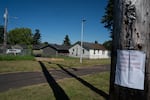
A sign warns of the elevated pH contamination of water in a ditch, posted in a neighborhood across the street from the Nippon Dynawave Packaging Co. after the chemical disaster in Longview, Wash., on May 27, 2026.
Eli Imadali / OPB
White liquor is used to soften wood chips into pulp in the papermaking process. It’s highly caustic, with a high pH level like bleach. Touching it can cause second- or third-degree chemical burns.
That chemical entered a ditch system that drains into the Columbia River, a primary thoroughfare for endangered fish species. Some fish have been found dead in those ditches.
The Southwest Washington city of about 38,000 people gets its water from an underground aquifer that’s recharged by the Columbia River.
During a press conference Thursday afternoon, officials said they were pulling clean water from the Cowlitz River to push polluted water away from Longview’s groundwater wells.
They’re also monitoring water draining into the Columbia River. They’re aiming to keep pH levels below 9. As of Thursday afternoon, two drainage discharge points had pH levels at 7 and 8.5.
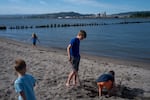
Children visiting with family from Texas play on Dibblee Beach in Rainier, Ore., across the Columbia River from the Nippon Dynawave Packaging Co., seen in the background. After reading about the accident and river contamination, they did not allow the children to play in the water.
Eli Imadali / OPB
While white liquor can be acutely damaging — it harms people and wildlife immediately — its environmental effects typically don’t last for long.
“Unlike an oil spill, where weeks and months later you’re still seeing it, I think this will go away fairly quickly,” said Joel Baker, an environmental chemist and professor at the University of Washington.
White liquor is mostly made up of sodium hydroxide, also known as lye, which is widely used in soaps and cosmetics. It becomes harmless as it mixes with natural acids in the environment, essentially turning into water and salt.
The drainage ditches around the paper mill aren’t used for irrigation, so they’re not a source of water for farmers, ranchers or other water users. They were built in the 1920s to mitigate flooding around low-lying Longview.
During Thursday’s conference, officials said residents might notice decreased water pressure as the city opens fire hydrants to flush the ditch system with clean water. People might also notice a sulfuric smell, as the low-pH water mixes with high-pH water.
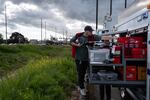
United States Environmental Protection Agency crews work near a ditch on May 26, 2026. The ditch was contaminated and located across the street from Nippon Dynawave Packaging Co.
Eli Imadali / OPB