In the aftermath of the deadly Longview paper mill disaster that released a corrosive chemical into nearby waterways, emergency response crews are done flushing a drainage system around the mill.
But even as Washington state officials say they’re making progress on the environmental response, officials with the Confederated Tribes of Warm Springs are raising concerns about long-term effects on the Columbia River.
“Contaminated water was directed into the Columbia River — a living ecosystem that is directly connected to our people, our culture, and our way of life,” Dennis White III, the Warm Springs tribal chairman, said in a statement Friday.
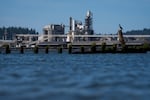
FILE - A bird perches across the Columbia River from Nippon Dynawave Packaging Co., where a May 26 chemical disaster occurred and contaminated the river, in Longview, Wash., on May 27, 2026.
Eli Imadali / OPB
As of Thursday, environmental crews had recovered nearly 3,000 dead fish from a ditch system near the mill that drains into the Columbia River, according to the Washington state Department of Ecology.
pH levels were back to normal in those ditches after authorities opened up fire hydrants to flush water through to dilute the white liquor that spilled from the Nippon Dynawave Packaging mill.
White liquor is a highly corrosive chemical that can cause second or third-degree burns on people and harm or kill wildlife, though its environmental effects don’t last long. Once it mixes with other natural acids in waterways, it essentially becomes water and salt.
“The Columbia River is a large, fast-moving system, and high pH materials like white liquor that may have entered the Columbia River system are diluted to a level that’s not considered a danger for fish and wildlife,” said Britton Ransford, a spokesperson for the Washington Department of Fish and Wildlife.
But White, with the Warm Springs tribe, urged continued attention to the health of the river.
“While reports indicate that river conditions currently meet established safety standards, we can only hope those assessments prove accurate for the well-being of the Columbia River,” he said.
So far, response crews have not received any reports of fish or wildlife mortalities in the Columbia River, Ransford said.
Washington Department of Ecology officials say most of the killed fish, which included species like the common carp, catfish, sunfish, bass, peamouth chub and at least two hatchery-raised salmon, appear to have died right after the chemical spilled. There have been no recent fish or wildlife mortalities.
Ransford said the fish didn’t die because the chemical was toxic. They died because the chemical caused the pH levels in the ditch and drainage system to spike, irritating their gills and causing them to suffocate.
Environmental agencies continue to test and monitor those pH levels. Even though they say the levels are back to normal, they are warning residents to keep away from sloughs, dikes, and drainage ditches until further notice.
Longview’s drinking water remains safe, and the Columbia River remains open for fishing and recreation, officials said.
Crews are still recovering dead fish from the drainage and ditch system. Ecology officials say people might still see fish that died during the initial release of the chemical float up to the surface as they decompose, and that is normal.
The public can continue to report sightings of dead or distressed fish or wildlife by calling 1-800-22-BIRDS.