Subscribe to OPB’s First Look to receive Northwest news in your inbox six days a week.
Good morning, Northwest.
Smoke is becoming a more regular part of life during the summer for people across Oregon.
OPB’s Joni Auden Land and Amanda Linares report this morning on the long-term trends of wildfire smoke and when Oregonians can expect this latest haze to dissipate.
Also this morning, the stinky, slimy survey in Newport that’s helping researchers understand salmon runs.
Here’s your First Look at Thursday’s news.
— Bradley W. Parks
Top story
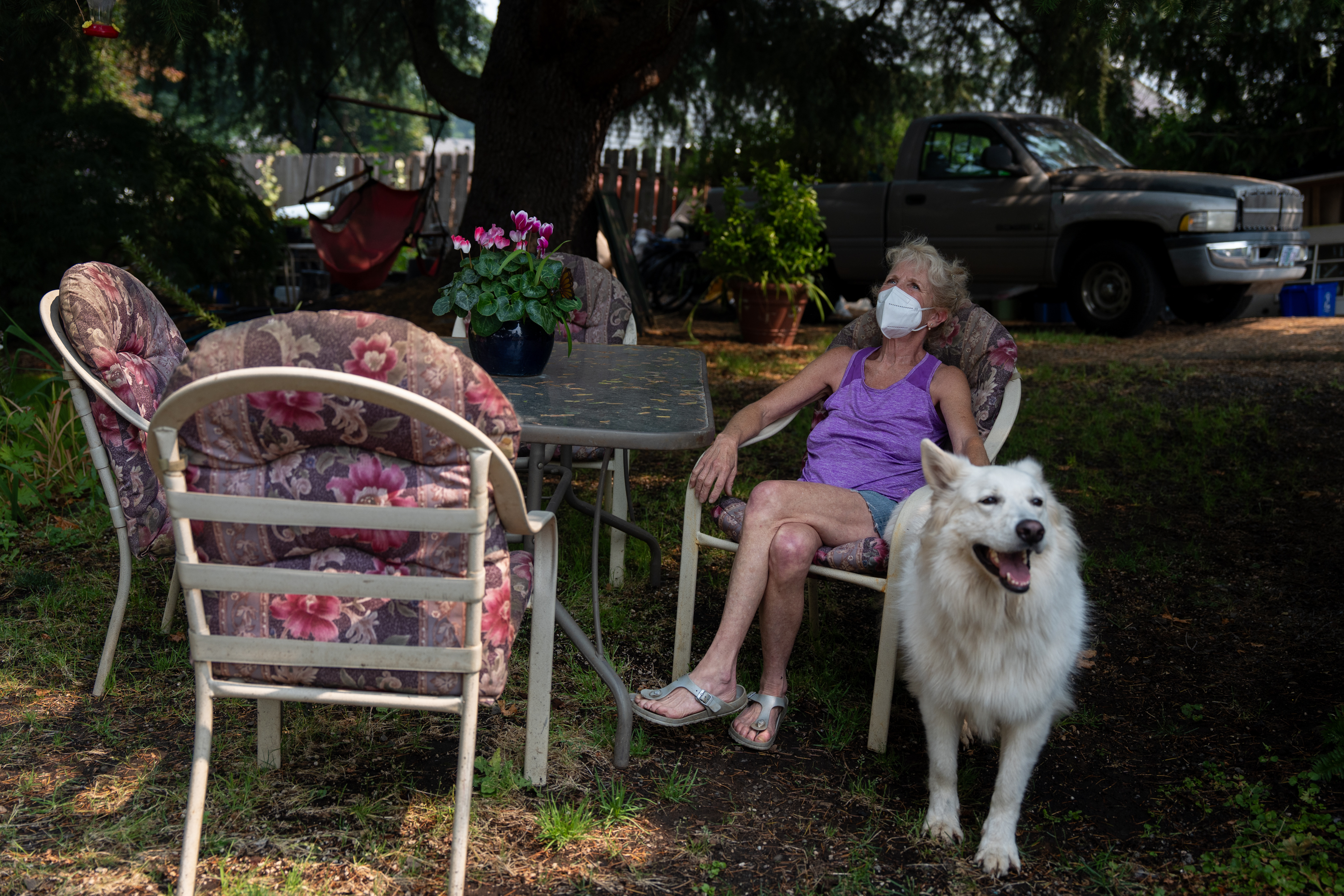
Fawnda Buck wears a KN95 mask as she looks up to the smoky sky as she rests in the yard, accompanied by one of her dogs, Porsche, in Sandy, Ore., on Aug. 5, 2026.
Eli Imadali / OPB
Wildfire smoke becomes a regular occurrence across Oregon, as residents learn to adapt
Wildfire smoke continued to blanket much of Oregon yesterday, a result of several fires burning across the Pacific Northwest. All but two counties in Oregon were under some sort of air quality advisory as of yesterday afternoon.
It’s part of a yearslong trend. For the past decade, nearly every region of Oregon has seen an increase in wildfires and, as a result, smoke.
Communities that rarely saw smoke at the start of the 21st century now see at least several days of smoke per year, according to a study by the Oregon DEQ.
“We think the patterns of the past have changed,” said DEQ’s Ali Mirzakhalili. “We’re going to have to deal with an increased number of smoky days. The wildfire seasons are starting earlier and lasting longer and spreading farther.” (Joni Auden Land and Amanda Linares)
3 things to know
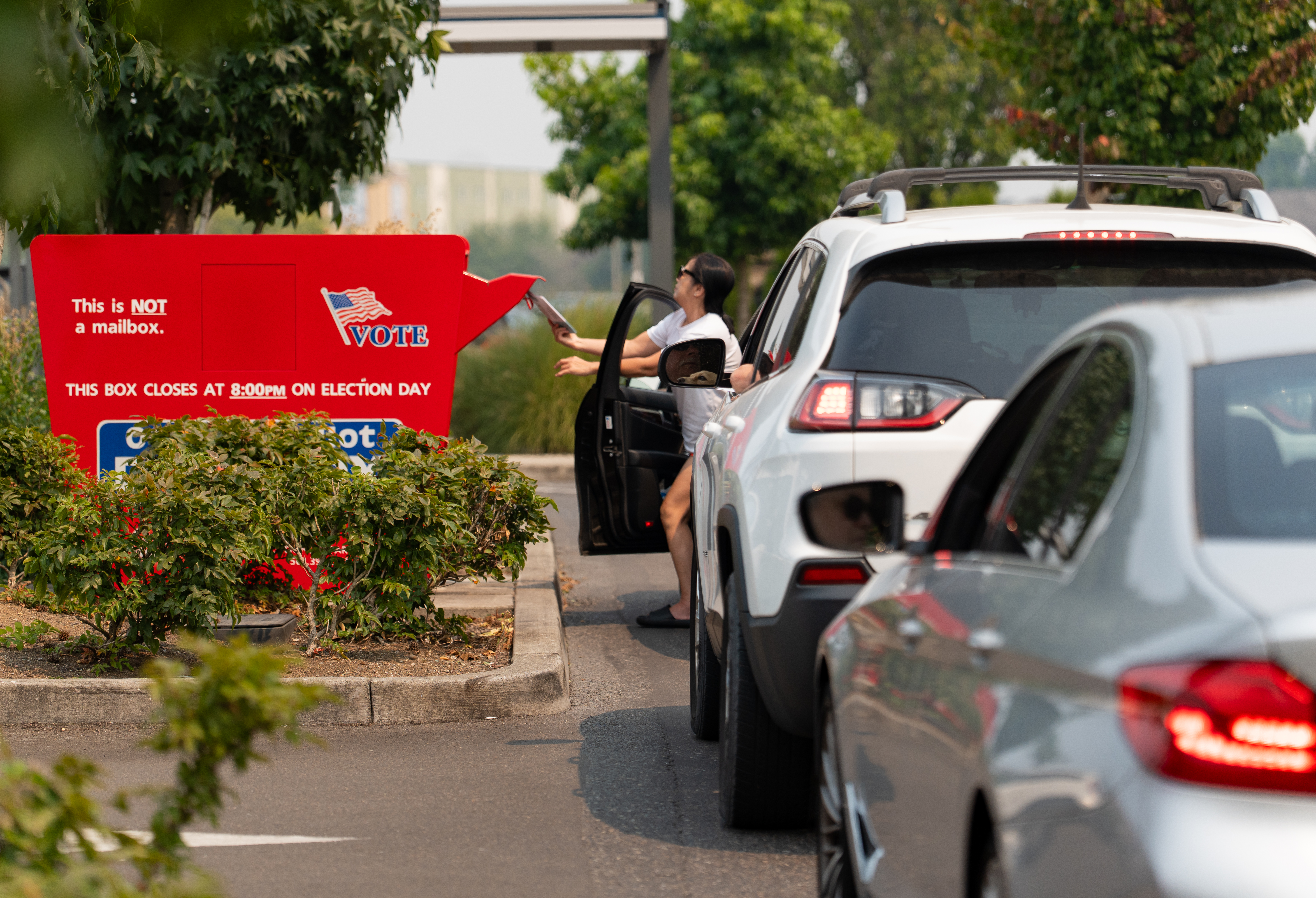
Voters drop off ballots in a ballot box at Vancouver Mall in Vancouver, Wash., on Aug. 4, 2026.
Saj Sundaram / OPB
- At a public hearing hosted by the Portland City Council yesterday, some people made impassioned pleas for the city to do whatever it takes to ensure the Trail Blazers remain in Portland, while others believe keeping the NBA team is not worth the roughly $400 million the city is contemplating spending on the Moda Center. (Dirk VanderHart)
- Just a month after saying that Clackamas County “can and should” have data centers, a county commissioner running for reelection has changed her tune. Commissioner Diana Helm said at a board meeting Tuesday it was her goal to enact a countywide moratorium on data centers until state lawmakers take up the matter in the 2027 legislative session. (Holly Bartholomew)
- Unofficial primary results for legislative seats in Southwest Washington are giving hope to Democrats who want to unseat Republican incumbents this fall. Results for four positions in the state’s 17th and 18th districts were all led by Democratic challengers yesterday, despite big spending by PACs for Republican candidates. (Erik Neumann)
Northwest headlines
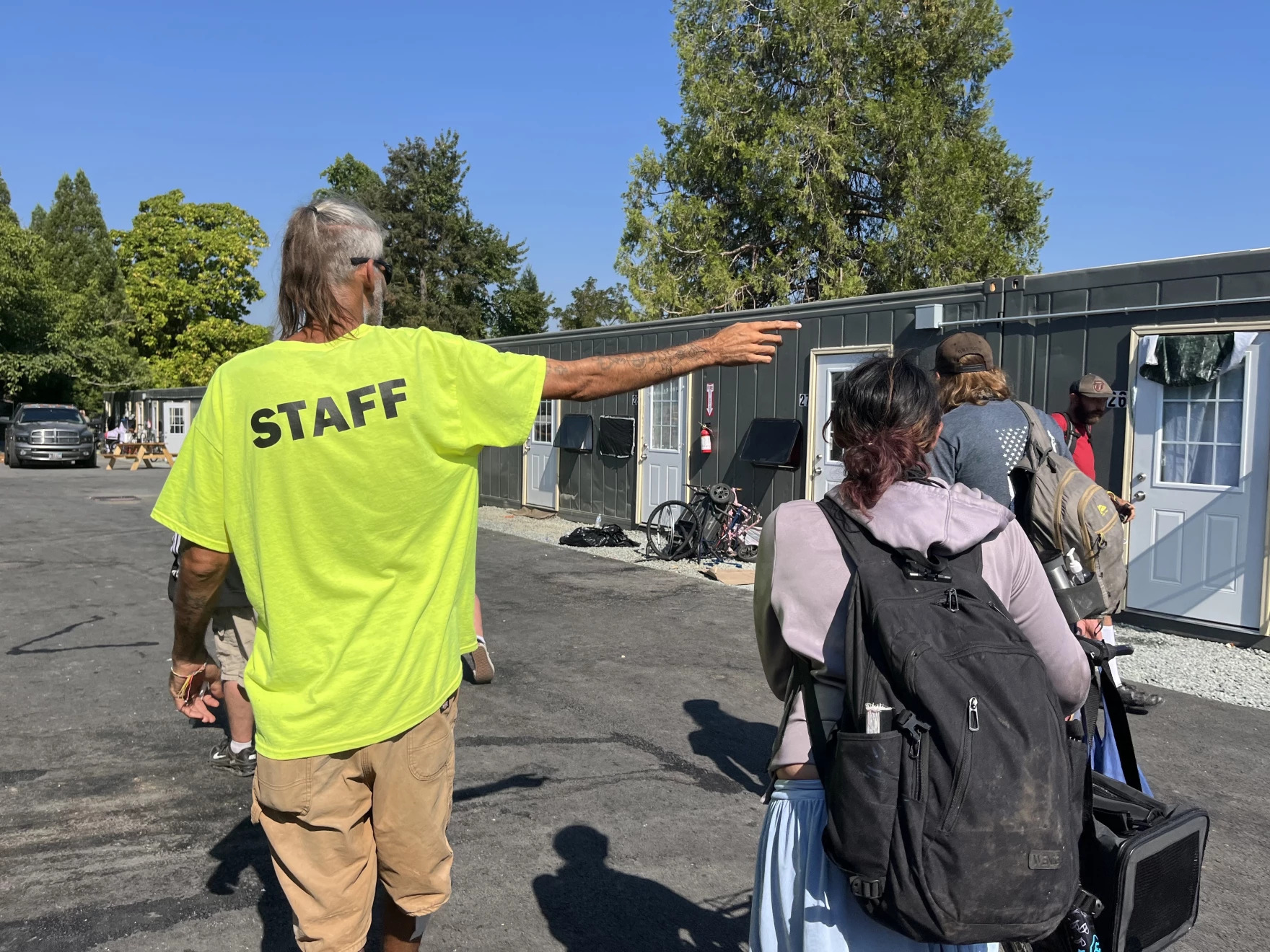
Gary Nichols gives new residents a tour of Parker's Place Village in Grants Pass on Aug. 4, 2026.
Jane Vaughan / JPR
- Firefighters get a handle on Spokane wildfires as tens of thousands remain evacuated (Manuel Valdes, Martha Bellisle and Gene Johnson, AP)
- Oregonians with some college but no degree could help state economy, university budget woes (Tiffany Camhi)
- Lane County deputy facing child exploitation charges resigns (Rebecca Hansen-White, KLCC)
- Man sues Eugene Police Department, officers for excessive force after being punched, tased in 2025 arrest (Nathan Wilk, KLCC)
- Eugene Clean Energy Fund qualifies for November ballot (Nathan Wilk, KLCC)
- Ashland voters will decide whether utility fee hikes need voter approval (Roman Battaglia, JPR)
- Grants Pass’ new 150-bed homeless shelter nears full occupancy (Jane Vaughan, JPR)
Listen in on OPB’s daily conversation
“Think Out Loud” airs at noon and 8 p.m. weekdays on OPB Radio, opb.org and the OPB News app.
One more look
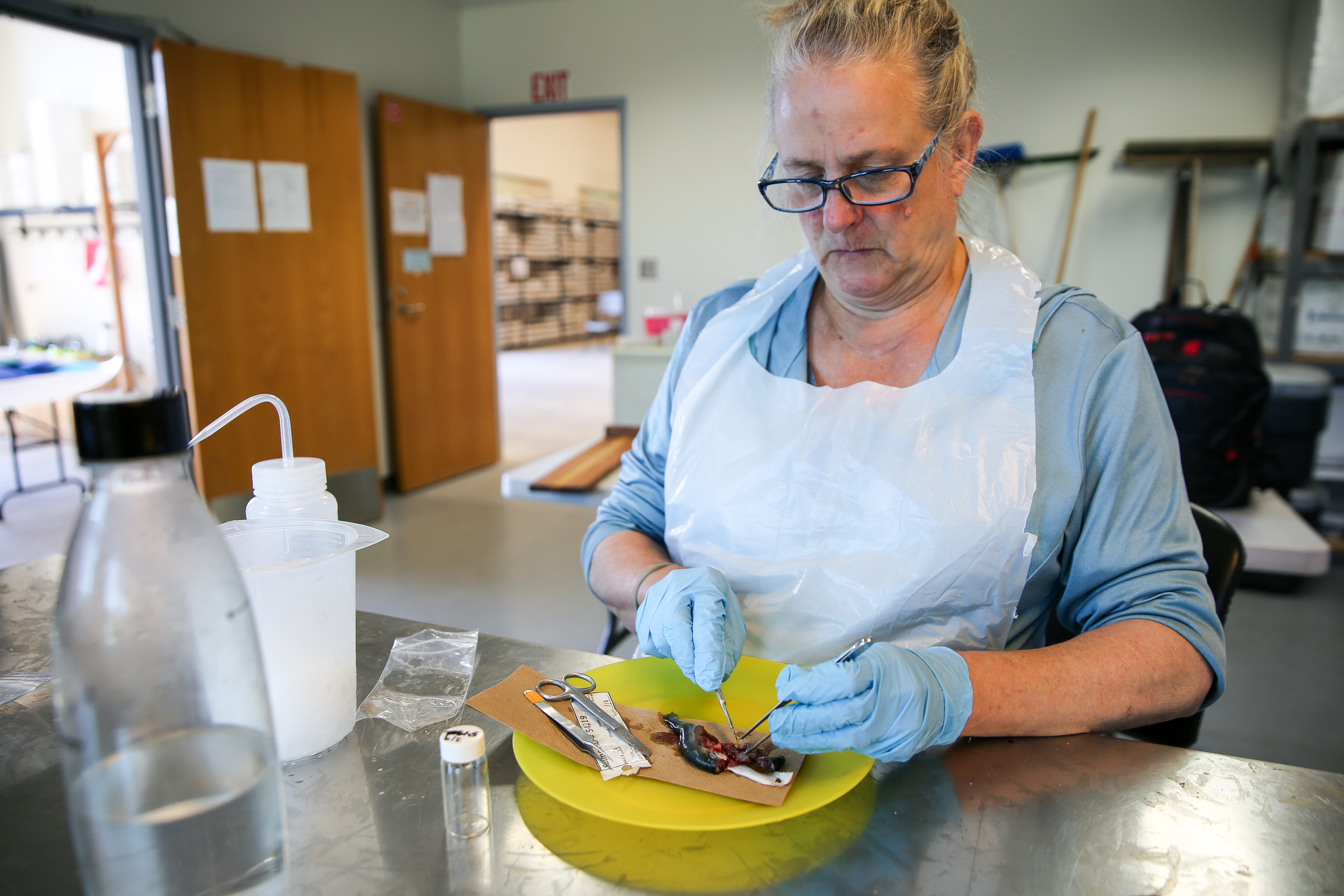
Cheryl Morgan, the principal investigator for OSU on the fish necropsy, looks for the tag in the head of a juvenile coho salmon in Newport, July 29, 2026.
Kristian Foden-Vencil / OPB
Mass fish necropsy helps forecast salmon returns in Oregon
Cheryl Morgan with Oregon State University leans over a tray with a scalpel and swiftly cuts open the head of a juvenile coho.
“This one has a tag,” she explains. “It’s a tiny, thin piece of wire in its snout somewhere that tells us when and where it was released.”
The mass necropsy is not for the faint of heart. But by sampling a couple thousand fish each year, biologists learn how young salmon are faring in the ocean.
It’s a keystone study that started in the 1990s, when several species of salmon were listed under the Endangered Species Act.Scientists back then knew a lot about why the fish were struggling in rivers. They knew about the dams, gas bubble disease and the lack of habitat. But they had little idea what was happening in the ocean.
Since then, this annual fish survey has added to the knowledge base. But the event has also become a favorite with students and researchers as they gather together in the name of science. (Kristian Foden-Vencil)
Subscribe to OPB’s First Look to receive Northwest news in your inbox six days a week.