AFP via Getty Images, Jeremy Thompson/Flickr
Paul Busch was 16 years old when he was sexually abused by his ballet teacher at the Interlochen Center for the Arts in 2005. At the time, Busch told NPR, he was living away from his parents, wanted more than anything to be a professional dancer and revered the teacher who harmed him.
Busch is sharing his experience publicly for the first time after spending 21 years reckoning with what happened to him at the Michigan boarding school.
“A lot of my desire was to prove that I was enough,” Busch said. “That I was good enough and that I was worthy of love.” He said that “this was the perfect condition” for someone to prey on him.
His story reflects the larger themes of a sweeping independent report, released last month, that details decades of sexual abuse allegations on the campus of the prestigious arts boarding school and summer camp.
In the report, former Interlochen students recount some 70 allegations of sexual abuse by nearly 50 adults who were employed or affiliated with the school from the 1950s to the 2010s. It’s a stark contrast to the longtime idyllic image of Interlochen, which helped launch the careers of performers such as Josh Groban, Norah Jones, Chappell Roan, Felicity Huffman and Da’Vine Joy Randolph.
The report offers a window into the conditions that contributed to the abuse. In many cases, it says, adults were able to have one-on-one interactions with students, while the children at the school had limited communication with their families and were vulnerable due to age, sexual identity and lack of experience. And, it says, some were scared to report what happened to them.
The report includes allegations of sexual abuse by convicted sex offender Jeffrey Epstein, an alumni and benefactor, and his accomplice Ghislaine Maxwell. NPR reported in February that Epstein met and recruited two young teenagers on the campus. But the allegations go far beyond the disgraced financier, who died in prison in 2019.
Interlochen hired Sanghavi Law Office in 2024 to investigate abuse at the school after an alumna came forward about her experience in the 1970s regarding a longtime faculty member and administrator.
In a letter to the community released alongside the report, Interlochen said that today it is “fundamentally different from the institution described in this report.” In a statement to NPR, the school described safety measures it has put in place to protect students and a network of resources, including a team of school counselors, social workers and a psychologist.
But for Busch, the response from Interlochen is not enough.
“They get to say, ‘Case closed,’” he said. “That is completely unacceptable because — guess what? — my life is still open.”
Together, Busch’s perspective and the report’s observations shed light on a decades-long history of sexual abuse at a school that was built for children and teenagers who aspire to be artists but were often unprotected, due to what the report called “gaps in oversight” and a “permissive environment.”

A band rehearses at Interlochen in 1942, when there was only a summer program for young musicians and artists.
Arthur S. Siegel
In its letter to the community, Interlochen named three former staff members and one former trustee who have been accused of sexual misconduct. Only one of them is still alive — Thomas Clower, the teacher who pleaded guilty to abusing Busch.
At the time that the law firm’s report was released, Clower’s name was listed as an instructor on the website of a dance school for children and teenagers in Texas. It has since been removed.
For this story, NPR spoke to nearly a dozen people, including Busch; a witness to his sexual abuse; his mother, brother and sister; and one of his closest friends from Interlochen. NPR also reviewed court documents, a report from the sheriff’s office, a recording of a conversation between a Texas parent and Clower, and current correspondence between Busch’s family and Interlochen. Clower did not respond to multiple attempts by NPR to contact him, including through his attorney. Interlochen would not comment on the specifics of Clower’s case and its aftermath to NPR.
A 15-year-old striving to succeed
In the fall of 2004, Busch felt special. It would take less than a year for that feeling to be replaced with shame and isolation, he said.
After initially attending Interlochen as a summer music student, Busch told NPR, Clower recruited him from a ballet studio in Dayton, Ohio. He secured a partial scholarship as a boarding student for his sophomore year of high school. The summer students dream of being invited to the boarding school, he said.

Paul Busch during his time studying dance at Interlochen.
Via Paul Busch
“It was, at that point, my prayers being answered,” said Busch, now 37, in a recent interview from his home in Nashville, Tenn.
But, Busch said, the bliss quickly dissipated as Clower, a well-known and award-winning ballet teacher, showered him with attention and became increasingly involved with his life. Busch said that Clower requested to be his mentor and that he took several of Clower’s classes.
The two met often in his office, Busch said. A few months into the semester, Clower began emailing him. Busch would later describe to law enforcement an email that he called “inappropriate,” with questions about his personal life and sexual activity. The report, written by the Grand Traverse County Sheriff’s Office, also describes warm responses from Busch, which he now says show “how groomed I was … and how vulnerable and dependent that I became to him.”
Busch said that because he wanted to do well at Interlochen, he let a lot of Clower’s inappropriate conduct slide. “It’s really hard to differentiate what’s appropriate and what’s not until it’s too late,” he said.
Special permission to visit a teacher
The interaction that led to Clower’s conviction happened on a cold spring day during Busch’s first year at Interlochen. Clower was 44. Busch had recently turned 16. He wasn’t the only student in the room, according to the report from the sheriff’s office.
Nellie Salisbury, then a 15-year-old fellow student, told NPR that Clower drove her and Busch to his house after they got special permission from the school. “We thought we were going over there because we were special dancers getting sort of like a treat,” said Salisbury, now 36. She remembers the three of them on the couch — Clower next to Busch, and Salisbury a few feet away on Busch’s other side. She said Clower handed her a chocolate bar and then put on a movie.
Once the movie was on, she said, she noticed Clower taking off the jangly silver bracelets from his wrist and placing them on the coffee table.
Busch said Clower casually threw a blanket over the two of them. Clower was sitting close enough that their thighs touched, Busch said, and then Clower put his hand on Busch’s upper thigh. Busch told NPR that Clower then reached his hand into Busch’s pants and began to touch his genitals.
“My heart was like beating out of its chest,” Busch said. “I froze.”
Clower then moved Busch’s hand toward his lap, according to Busch. That prompted him to pull away, Busch said. Clower then stood up and went to the bathroom, according to Busch and Salisbury.
Busch told investigators that when Clower stood up, his “penis was in an erect position.” Salisbury remembers Busch turning to her when they were alone in the room, looking scared and saying, “What do I do? Help me.” Clower later drove the students home.
“He wanted me and he took me and it didn’t even matter that someone else was watching it happening,” Busch said.
Busch acknowledged that the description of the abuse that he gave to NPR is more serious than what he told investigators at the time of the incident. Busch denied to a school counselor at the time that Clower had touched his genitals, the report from the sheriff’s office says. He told investigators that Clower was “rubbing the inside of his thigh” and “rubbed near his groin area,” but said his belt buckle was unfastened afterward. Looking back, Busch told NPR that he didn’t describe the full extent of the touching because he was in denial and afraid of getting in trouble.
That’s a common response from minors who are victims of sexual abuse, said Matthew Curtis, a Michigan-based attorney representing multiple people who allege they were abused while students at Interlochen. Curtis said minors might not report their abuse at the time it occurs for a number of reasons, including self-protection, and at Interlochen, the stakes were high.
“These are all aspiring students, aspiring fine arts individuals,” he said. “They’re looking for careers and success. … Coming forward could really have sabotaged their career.”
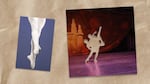
Photos Getty Images and via Paul Busch
Clower did not respond to requests for comment on Busch’s account. But Mike Skaggs, a parent of a former ballet student in Texas, shared a recording with NPR that appears to shed light on how Clower sees the incident that led to his criminal conviction. Skaggs said he recorded himself confronting Clower about what happened at Interlochen.
According to Skaggs, Clower taught Skaggs’ 13-year-old daughter at the Dallas-area Ballet Ensemble of Texas. In the 2025 recording, Skaggs can be heard telling a man whom he refers to as “Mr. Thom” and a third person that he has some reservations about an agreement the young dancers must sign. Then, Skaggs says he has been researching Clower and found newspaper articles about his Michigan conviction.
He wants an explanation. He says he heard that Clower claimed the “kids made it up” and that he was “exonerated.”
“That’s true,” the man identified as Clower states, without providing evidence. Skaggs notes that Clower pleaded guilty, and Clower clarifies that it was “to a misdemeanor.”
Clower then explains what he views as his mistake: “I was in my house, 30 below zero, and we all got under a blanket. The girl and the boy and me. And I put myself in a place where I was too close to the kids.”
Clower casts the incident as a misunderstanding: “I didn’t even think, ‘This is going to look horrible.’ … What happened was the girl thought that something happened underneath the blanket and then she called her parents.”
The aftermath
Busch said the details of what happened after the incident are a blur. He told investigators at the time that Clower picked him up from school three days later and drove him to Clower’s house, where, Busch said, the teacher apologized. Busch told NPR that Clower told him that he felt “sick to his stomach” about what happened.
Salisbury’s parents sounded the alarm to Interlochen. Busch said he was called into an administrator’s office. The school had already called his parents, and he said administrators demanded that he tell them what had happened.
“The feeling was I’m in trouble ... which is probably the worst thing to feel,” Busch said. “That only leads to more shame, guilt, isolation and fear, you know? I mean, it was just paralyzing.” He does not remember anyone from Interlochen asking whether he was OK.
The report from the sheriff’s office shows Busch was interviewed by an investigator twice, the second time without another adult present. He was asked about his sexuality. The investigator said in his report that a “reasonable person” would believe the teen and the 44-year-old “have a relationship that may not necessarily be only at a friendship level.”
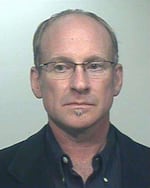
A mugshot of Thomas Clower from 2005.
Grand Traverse County Sheriff's Office
“It was like I was being interrogated,” Busch said of the school’s and the investigators’ responses. “It was like I was the perpetrator.” He said it led to years of struggling with his identity and sexuality.
Clower was arrested the next month, in April 2005.
In June of that year, he pleaded guilty to attempted fourth-degree criminal sexual conduct — a misdemeanor — and was sentenced to 90 days in jail. He was ultimately released nearly a month early due to overcrowding, according to court records obtained by NPR, and was added to a sex offender registry. Interlochen fired him.
Busch said he felt like a “social pariah” for his final two years at Interlochen. “I was never integrated back into the community,” he said. “I was always looked at as different.”
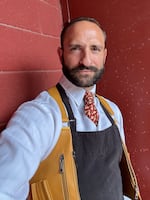
Busch says he is still waiting for accountability from Interlochen.
Paul Busch
He doesn’t recall the school offering him counseling or mentioning the incident to him again after the legal proceedings concluded. He said he was not aware that Interlochen would name Clower in the letter it released last month alongside the law firm’s report.
NPR asked Interlochen for comment on how Busch described his treatment at the time of the incident and the lack of support afterward. Interlochen did not comment on Busch’s experience specifically but apologized “for the harm experienced by members of our community.”
Busch said that the last time he heard from Clower was in a letter he received at some point in his last two years at Interlochen and that in it his former teacher apologized and admitted his actions were wrong. Busch said he burned the letter in his parents’ driveway in Ohio.
A “freelance master teacher”
Clower was listed on the website of the Ballet Academy of Texas as the director of the men’s division as recently as Friday, but his name has since been removed. Clower was also listed as the artistic director of the Ballet Ensemble of Texas, a nonprofit affiliated with the academy, until recently. That nonprofit’s website has been taken down.
Clower has worked at the academy since at least 2019, according to an NPR review of the website’s archives. The ensemble and the academy did not respond to multiple requests for comment.

A photo of Clower on a trip to Venice with members of the Ballet Ensemble of Texas.
Ballet Ensemble of Texas
In posts on the Ballet Ensemble of Texas’ Facebook account, Clower is pictured leading a group of young dancers on a multicountry trip around Europe in June and July of this year.
After his guilty plea, Clower was required to register as a sex offender in Michigan, according to court documents. Clower’s name is not currently on the Texas registry. NPR requested records from the Texas Department of Public Safety to see whether he was also previously registered in Texas and did not receive a response by publication time. Clower’s record would still be readily available in an employer background check.
A professional biography that was previously on the ballet academy’s website indicated that he continued to teach after his guilty plea. It described him as “one of the most energetic and inspiring teachers across the country” and lists a number of dance companies and organizations in multiple states.
In a video posted to YouTube in 2014, Clower said he had been a “freelance master teacher since the year 2000.” “Every Monday, basically, I’m in a new location with a new group of kids,” he said.
Busch said it makes him uneasy to think about Clower still working with kids. “Are we in that dire of a situation that we need dance teachers that badly that we’ll look to the side when we see that they’ve molested children?” Busch said.
His mother, Nancy Busch, said of Clower: “He should never be able to work with children.”
Skaggs, the parent who confronted Clower last year, said he eventually pulled his daughter out of the dance program. “I can’t believe I have to say this, but any teacher that’s been fired for sexual misconduct should never, ever teach again,” Skaggs said. “Full stop.” But when Skaggs shared the information with several other parents, he said, some of them defended Clower.
Living with it
Busch’s dance career still thrived. He attended Juilliard after Interlochen and danced professionally for more than a decade, most of which was spent in Europe. But despite his success, Busch said, he masked his emotions for years with substances. Recently, he finished a 10-month recovery program for substance use disorder and PTSD.
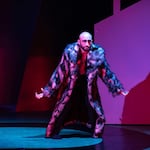
Busch danced professionally for over a decade.
Ian Whalen
And as the extent of sexual abuse of Interlochen students has come into sharper focus, he has been reflecting on the school and how it handled his experience. “It’s the lack of aftercare … let alone that it happened 69 other times with other people,” Busch said. “The fact that the predator was on the campus to begin with is all Interlochen’s responsibility.”
In response to the Sanghavi report, Interlochen sent the names of those accused of misconduct to the Grand Traverse County prosecutor’s and sheriff’s offices. Curtis, the lawyer representing multiple individuals who allege abuse at Interlochen, said that there is no route for some of his clients to pursue criminal charges, because their alleged abusers are dead. In Michigan, the statute of limitations for criminal sex crimes depends on the severity of the crime, according to RAINN, an anti-sexual violence organization.
Interlochen’s letter to the community says there were very few incidents at Interlochen in the past 25 years, but Busch says this offers little comfort to him. The school established a counseling fund to help cover future care for affected alumni.
That has come too late for Busch, who has already paid for counseling for the last two decades.
During the law firm’s investigation, former students were asked what they hoped would come of it. According to the report, a number of alums said that “they hoped that this investigation would lead to cultural changes at Interlochen.” Others said they hoped for “accountability,” according to the report.
Busch said he’s still waiting for accountability from Interlochen — and he has another reason to share his story now.
“I hope that other people understand that they’re not alone,” Busch said.