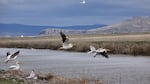
White Pelicans patrol Tule Lake.
Jes Burns, OPB / EarthFix
In 2024, a botulism outbreak in Southern Oregon’s Klamath Basin killed nearly 140,000 birds. Botulism is a kind of soil bacterium that breeds in shallow, stagnant waters with low oxygen, and birds can be paralyzed and even die when they consume it.
Now, the Bird Alliance of Oregon is warning that the basin — a major pitstop for birds migrating along the Pacific Flyway — is seeing another outbreak that could be even deadlier than the last one.
Teresa Wicks, an Eastern Oregon biologist with the Bird Alliance, said on OPB’s “Think Out Loud” the risk to waterfowl and shorebirds in the region is severe, with the Tule Lake National Wildlife Refuge picking up close to 150 dead birds a day. She says that’s the highest number they’ve ever seen this early in the season.
Background levels of botulism are almost always enough to kill a few birds each year, Wicks said, but it’s only since 2020 that the basin has seen such catastrophic die-offs.
This year, the combination of an extended breeding season and low water levels where botulism can flourish is creating the perfect conditions for a large die-off, she said.
A severe outbreak is preventable, Wicks said, by reflooding these wetlands where botulism is reproducing.
The Bird Alliance is now calling on the Bureau of Reclamation and Department of the Interior to do that at the Tule Lake and Lower Klamath wildlife refuges.
Wicks says thanks to work from the Klamath Drainage District, a small amount of water has gone to the Lower Klamath refuge through an agreement with the Oregon Water Resources Department. But she says much more is needed for Tule Lake and the entire Klamath National Wildlife Refuge Complex.