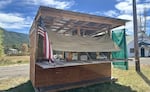
The farmstand at 5040 State Highway 38 in Drain, Ore., on Aug. 26, 2026.
Hannah Bush / KLCC
Drain, a small town in Douglas County, lost its grocery store, Ray’s, in January. That left the rural community with a Dollar General and out-of-town stores as options. One small farmstand is hoping to provide a local, fresh option.
Cars and semi-trucks pass the small wooden farmstand while traveling through Drain on Route 38. Sunnydale Grange Farmstand sells locally grown produce and goods from seven local gardeners and farmers.
The stand sells mostly produce but offers other goods such as honey, milk, jam and baked goods.
Devon Trig is the owner and operator of the stand. He said that while Sunnydale Grange doesn’t replace a full grocery store, the resource is good to have because food can be harder to get in rural areas.
“While you have a lot of land, which is different than in the city, you still have to rely on your local community to kind of get by,” Trig said. “You need to know your neighbors, work with people that are professionals in this area, and it’s just like a little extra layer.”
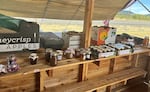
The farmstand, pictured on Aug. 26, 2026 in Drain, Ore., offers a changing variety of goods depending on the season.
Hannah Bush / KLCC
Jeana Beam is the executive director of Umpqua Economic Development Partnership, an organization focused on economic growth and development in Douglas County. She said there are many gaps in the resources available to rural communities.
“What resources we do have are limited, and sometimes end up being a little bit first come, first serve,” said Beam, “and then a lot of times, amenities or services that you would readily have available in a bigger area, there’s not enough population to support them within a small town. So, for instance, a grocery store.”
One major obstacle around food resources in rural areas is price. Trig acknowledged that the farmstand is more costly than discount stores such as Dollar General. He said the farmers who supply the stand need to be paid for the time and effort that goes into their goods, which affects the price.
Although going out of town may not be affordable either.
“It’s a drain on a lot of people financially. So instead of being able to make a 5-mile trip to go to the grocery store,” Beam said, “any cost inflation is tripled when you’re talking about small communities. We have added fuel cost.”
Beam said that instead of trying to bring in big chain businesses like a Safeway or an Albertsons that the rural economy can’t support, she thinks the options that already exist in town should be supported through the community and legislation.
Trig said the stand has not seen an increase in business yet since Ray’s closed. He hopes more people will stop by for some produce or treats, rather than getting all of their groceries out of town.
Hannah Bush is a reporter with KLCC. This story comes to you from the Northwest News Network, a collaboration between public media organizations in Oregon and Washington.
It is part of OPB’s broader effort to ensure that everyone in our region has access to quality journalism that informs, entertains and enriches their lives. To learn more, visit our journalism partnerships page.