Subscribe to OPB’s First Look to receive Northwest news in your inbox six days a week.
Good morning, Northwest.
Oregon is one of just a handful of states that uses prison labor to fight wildfires.
Despite dangerous conditions and low pay relative to typical firefighters, it’s one of the most sought-after jobs in prison. OPB’s April Ehrlich has that story to start today’s newsletter.
Also this morning, the details of Portland Public Schools’ plan to close up to 20 schools.
Here’s your First Look at Thursday’s news.
— Bradley W. Parks
Top story

Incarcerated people train to “mop up” a fire at South Fork Forest Camp in Tillamook, Ore., on May 13, 2026.
Eli Imadali / OPB
Incarcerated people among thousands of firefighters battling Oregon’s aggressive fire season
On a misty spring day in Oregon’s Tillamook State Forest, a group of incarcerated men wearing yellow collared shirts and hard hats gathered around an instructor warning them about the dangers of an over-pressurized firefighting hose.
If left for too long, he said, a hose could overheat and explode, leaving those nearby with third-degree burns. Such were the risks that these men were willing to take to avoid sleeping in a prison cell.
“It’s dangerous, but that’s why we train, and we train hard,” said Jason Russell, a 41-year-old from Salem incarcerated at the South Fork Forest Camp, a state prison.
More than 2 million acres have burned in Oregon so far this year, breaking the state acreage record. Firefighters, including 218 incarcerated people, have helped prevent most of the flames from reaching residential towns.
But while most firefighters make $25 an hour on the fire line, Oregon’s incarcerated firefighters earn $25 a day. During a 12-hour day, that amounts to about $2 an hour. They can also earn a monthly award based on their performance. (April Ehrlich)
3 things to know

FILE - People wait at the intersection of Southeast César E. Chávez and Hawthorne boulevards on March 27, 2026, in Portland, Ore.
Saskia Hatvany / OPB
- Leading U.S. medical groups are urging people to get updated flu and COVID-19 vaccinations this fall, banding together yesterday to issue guidelines and ease confusion caused by the Trump administration’s changing advice. (Lauran Neergaard, AP)
- Oregon’s largest school district has lost 6,000 students since 2018 and is projected to lose even more over the next few years. The district’s solution to this enrollment problem is to “rightsize” its campuses by closing up to 20 of the district’s 81 schools. (Elizabeth Miller)
- Portland City Council advanced a plan yesterday to rename the roughly 8-mile-long César Chávez Boulevard to Campesinos Boulevaard, months after reporting from The New York Times revealed that farmworker labor advocate had allegedly sexually abused women and girls. (Alex Zielinski)
Northwest headlines
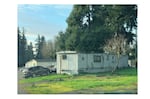
A manufactured home in this undated photo of Hidden Village Mobile Home Park in Clark County provided by Evergreen Habitat for Humanity.
Courtesy of Evergreen Habitat for Humanity
- Portland City Council considers naming Albina Vision Trust as developer of land near Moda Center (Kyra Buckley)
- Vancouver Habitat for Humanity buying mobile home parks to protect affordable housing (Erik Neumann)
- Coos-Curry Electric on the Oregon Coast raises rates 10.8% (Theo Greenly, JPR)
- Oregon to launch new Explore Health state health insurance marketplace in coming months (Shaanth Nanguneri, Oregon Capital Chronicle)
- 15-year-old Seattle Center shooting suspect denied home release (Casey Martin, KUOW)
Listen in on OPB’s daily conversation
“Think Out Loud” airs at noon and 8 p.m. weekdays on OPB Radio, opb.org and the OPB News app. Today’s planned topics (subject to change):
- Proposed changes to National Historic Preservation Act could exclude Native American input on federal projects
One more look

FILE - Oregon head coach Dan Lanning watches from the sideline during the second half of an NCAA college football game against Washington, Nov. 29, 2025, in Seattle.
Lindsey Wasson / AP
No. 2 Oregon turns to a goal-setting method used by Shohei Ohtani as it chases a national title
The Oregon Ducks have lofty goals after reaching the College Football Playoff in each of the past two seasons only to fall short of a national title.
This season, they’re hoping a goal-setting tool developed by a Japanese track coach and used by baseball great Shohei Ohtani can help them finally win a championship.
Introduced to the team this summer by coach Dan Lanning, the Harada method has resonated with many players.
“The Harada method definitely helps you hone in on little goals before getting to that big goal, and if you can’t do those little goals, like you just can’t expect that big goal, and that’s been the main thing we’ve been preaching,” receiver Evan Stewart said. (Anne M. Peterson, AP)
Subscribe to OPB’s First Look to receive Northwest news in your inbox six days a week.