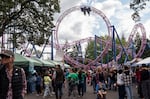
CORRECTED: Gov. Tina Kotek poses for a selfie at Oaks Amusement Park in Portland, Ore., where several unions held a Labor Day picnic on Sept. 7, 2026. Kotek spent part of Monday campaigning at the picnic and mingling ahead of the November election.
Saskia Hatvany / OPB
This year, Labor Day coincided with a fierce gubernatorial election season in Oregon as incumbent Gov. Tina Kotek, a Democrat, looks to fend off her challenger, Republican Christine Drazan.
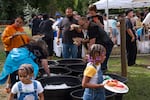
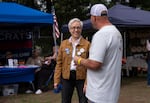
Kotek spent part of Monday campaigning at Oaks Amusement Park in Portland, where some of the state’s most powerful unions hosted their annual Labor Day picnic.
“I have your back,” Kotek told thousands of picnicking union members. “When you’re at the bargaining table, I will call your employer. I will stand with you so your contract is fair and you have what you need.”
A spokesperson for Drazan said the Republican gubernatorial candidate didn’t have elaborate Labor Day plans, but is campaigning hard “just like any other day.”
“This Labor Day, I’m thinking about every Oregonian who works hard and wonders whether there will still be opportunity here for their kids,” Drazan wrote on X, formerly Twitter. “As governor, I’ll make sure the answer is yes. We’re going to bring jobs, investment and optimism back to Oregon.”
While Labor Day is often an important campaign day for members of either party, this year’s holiday comes as workers face a rising cost of living and a lackluster state economy. Oregon’s unemployment rate is at a relatively low 5.2%, but it has steadily ticked upward over the last year and is higher than the national rate of 4.1%.
Oregon also has a longstanding reputation of being friendly to workers. The state was the first in the nation to pass a law recognizing Labor Day as an official holiday. In 2025, more than 15% of the state’s workers belonged to a union, compared to just 10% nationwide, according to the U.S. Bureau of Labor Statistics.
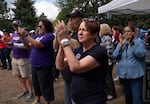
Rep. Sue Rieke Smith listens to the speakers at the Labor Day picnic.
Saskia Hatvany / OPB
Unions continue to have a powerful voice in Oregon politics, although their influence may be waning nationwide. In the early 1980s, more than 20% of the country’s workers were represented by a union, double the share today.
While members of both political parties work to score votes with labor unions, a majority of union members still tend to favor Democrats. In Oregon, unions have lobbied Democratic leaders to help pass laws related to paid leave, unemployment benefits for striking workers and establishing a higher minimum wage.
In her Labor Day message to voters, Drazan’s post included a video where she vowed to bring business investment back to Oregon. She said companies are relocating to other states, and she wants to “stop the bleeding.” Keeping jobs in Oregon, Drazan said, will entice more people to move and stay in the state.
The Labor Day event at Oaks Park was put together by the Northwest Oregon Labor Council. The group includes member unions such as Oregon chapters of the American Federation of State, County and Municipal Employees (AFSCME); Service Employees International Union (SEIU); Teamsters; and the United Food and Commercial Workers International Union (UFCW).
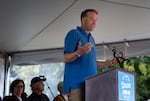
In addition to Kotek, who is seeking reelection in November, many other Democratic politicians were at the picnic. Oregon Secretary of State Tobias Read took to the podium to support Kotek and encourage union members to vote in the upcoming election.
“Every time labor succeeds in pushing back against concentrated power,” Read told the crowd, “every American family wins.”
The original version of a photo caption misstated the nature of the election in November. OPB regrets the error.