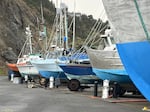
Fishing boats line the dock at Port Orford. Sept. 2, 2026.
Theo Greenly / JPR
Oregon fishing fleets will be allowed to keep and sell yelloweye rockfish next year for the first time in 25 years.
The species was declared overfished in 2002, closing commercial fishing for it. A recent assessment found the population has rebuilt.
Oregon Department of Fish and Wildlife fishery manager Troy Buell discussed the change with fishermen at a meeting in Port Orford Thursday.
“There was a time I didn’t think I’d ever see another yelloweye rockfish at the dock legally,” Buell said. “Now, it’s rebuilt.”
The amount fishermen will be allowed to land in 2027 and 2028 is small compared with catch limits for other species, but it represents a significant milestone in the recovery of yelloweye rockfish.
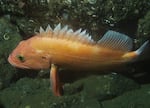
The brightly-colored yelloweye rockfish is one of the slowest-growing species off Oregon's shores.
Courtesy of Alaska Department of Fish and Game / JPR
“It’s a big deal for us,” said Phillip Russum, a member of the cooperative Port Orford Sustainable Seafood. “It’s a high-quality catch that we once harvested.”
Russum said the species’ rebound demonstrates fishing restrictions worked.
The reopening will also give Oregon scientists new opportunities to study yelloweye rockfish. Researchers rely on commercial fishing samples to montior the health of fish populations.
“Fisheries data is where we get most of the data on these fish,” Buell said. “We’re going to be able to start collecting some of that again and getting ages and lengths and maturities.”
Scientists will use the information to assess the population and help determine future catch limits.
Theo Greenly is a reporter with Jefferson Public Radio. This story comes to you from the Northwest News Network, a collaboration between public media organizations in Oregon and Washington.
It is part of OPB’s broader effort to ensure that everyone in our region has access to quality journalism that informs, entertains and enriches their lives. To learn more, visit our journalism partnerships page.