The Dramatic Disappearance of Mount Hood's Glacier Caves
The once spectacular glacier caves of Mount Hood have collapsed and disappeared. What happened?
1 of 21
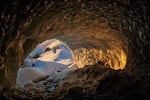
Images like this one helped popularize the dramatic glacier caves discovered on Mount Hood. After the caves were featured on OPB in 2013, national and international media from the BBC to the Smithsonian followed suit. Visits to the remote and dangerous caves increased steadily in the years that followed.
Brent McGregor
2 of 21
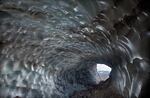
When the glacier cave team mapped Snow Dragon in 2012, this passage was part of a cave network that extended more than 7,000 feet in length.
Brent McGregor
3 of 21
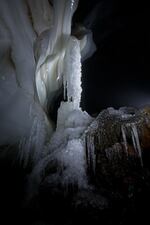
Meltwater within the caves would often freeze into massive ice columns. Temperatures inside the caves fluctuated seasonally as outside air entered through the large cave entrances. Outside air traveling through the caves had the effect of enlarging the passageways.
Brent McGregor
4 of 21
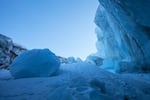
Snow Dragon after the ceiling collapsed in late 2014 or early 2015.
Brent McGregor
5 of 21
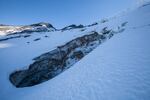
As the 2,451-foot-long Snow Dragon cave collapsed, beginning in late 2014, it created a series of canyons within the Sandy Glacier. Once the process of collapse began, it proved unstoppable.
Brent McGregor
6 of 21
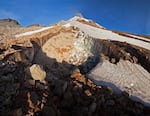
The collapsing Snow Dragon eventually created a massive canyon in the glacier. Within two years, all that remained was a field of rocks and snow.
Brent McGregor
7 of 21
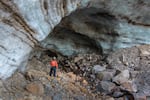
The last 40 feet of Snow Dragon. The cave, which in 2013 measured 2,451 feet in length, was completely gone by 2017.
Brent McGregor
8 of 21
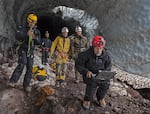
In 2015 and 2016, Pure Imagination was investigated by Dr. Andreas Pflitsch and his team from Ruhr University in Bochum, Germany. Using a variety of climate data loggers, temperature sensors and thermal imaging cameras, they sought to better understand the causes behind the sudden collapse of the glacier caves.
Brent McGregor
9 of 21
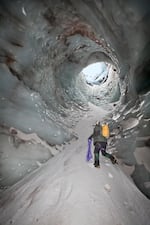
The spectacular "Cerberus Moulin" as it looked in November 2011. The moulin, or hole, dropped nearly 150 feet from the surface of the glacier to the floor of Pure Imagination cave. To enter and exit, the cave explorers used a complex system of ropes that were anchored into nothing more than snow and ice.
Brent McGregor
10 of 21
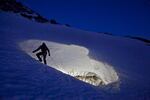
The glacier cave teams often entered the "Cerberus Moulin" at night when colder temperatures lessened the danger of collapsing ice and snow. In one year, the volume of this moulin increased by 400 percent. The moulin provided a second, upper entry point into the cave, possibly causing a "chimney" effect through which warm, outside air was sucked into the lower entrance, through the cave, and then into the moulin. Dr. Andreas Pflitsch maintains that these processes helped accelerate the collapse of the caves from within.
Brent McGregor
11 of 21
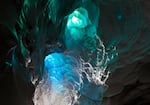
Areas of thin ice often formed beautiful skylights in the cave ceiling. When skylights melted out, holes would develop that allowed warm surface air to enter the caves. Dr. Andreas Pflitsch also identified dozens of warm springs within the caves that reached 78 degrees Fahrenheit. The mixing of cold and hot water created a fog that may also have exacerbated the melting, expansion, and ultimately the collapse of the caves.
Brent McGregor
12 of 21
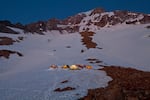
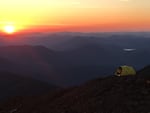
"Kamp Tenacious" was the name given to the rocky, exposed and often uncomfortable patch of glacier at 6,400 feet in elevation that served as base camp. It had the benefit of providing excellent access to the three named glacier caves; Snow Dragon, Pure Imagination and Frozen Minotaur. Each year, teams of specialists would spend up to a week based at Kamp Tenacious to map, survey and conduct science within the unique glacier cave ecosystem. Lead explorers Brent McGregor, Eduardo "Eddy" Cartaya and Scott Linn made more frequent visits to keep tabs on seasonal changes to the caves.
Brent McGregor
13 of 21
Sunset over Kamp Tenacious. Mount Hood, Oregon.
Ed Jahn / OPB
14 of 21
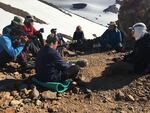
The "Meeting Room" at Kamp Tenacious, where scientific findings were shared and expedition planning was discussed each morning and evening.
Ed Jahn / OPB
15 of 21
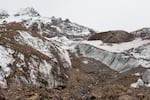
The Sandy Glacier has lost more than 50 percent of its mass over the past 100 years. Climate change is another trigger for the sudden collapse of the Mount Hood glacier caves.
Brent McGregor
16 of 21
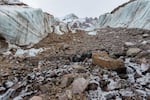
This photo was taken just months after an OPB television crew and a team of glacier cave explorers spent days documenting the last remnants of Pure Imagination. Brent McGregor has identified potential new passages that could invite exploration in the future, but the caves as documented by OPB in 2013 are gone.
Brent McGregor
17 of 21
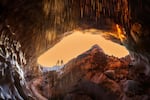
The mouth of the now-collapsed Snow Dragon cave used to point west toward the setting sun. The setting made for spectacular photos.
Brent McGregor
18 of 21
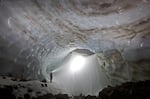
The entrance to Snow Dragon cave in January 2012. Note the distinction between so-called "permanent" glacier ice in the foreground and the deep annual snowpack at the cave mouth that would melt each summer. Eddy and Brent made up to seven trips to the caves in 2011 as they began their effort to explore and document the full extent of the cave system.
Brent McGregor
19 of 21
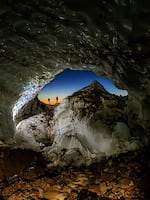
Snow Dragon cave, July 2013.
Brent McGregor
20 of 21
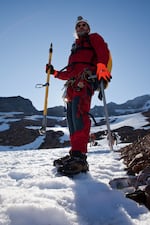
Brent McGregor, glacier cave explorer.
Katie Campbell / OPB/EarthFix
21 of 21
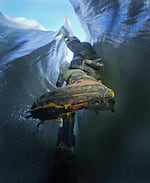
Eduardo "Eddy" Cartaya, glacier cave explorer.
Brent McGregor / OPB/EarthFix