Twenty years after the United States officially eradicated measles, the virus is taking advantage of waning vaccination rates and spreading again.
The United States reported over 2,000 cases of measles and three deaths last year, and the outbreak has gained steam in 2026 with cases in more than half of the states and major outbreaks in South Carolina, Utah and Florida.
There’s been a small but steady stream of cases and public exposure announcements in Oregon. So far this year, 13 people have been diagnosed with measles, and hundreds of people may have been exposed in the past week.
OPB’s been asking questions about the situation in Oregon, and how we got here. Here are some answers.
How bad is the situation here in Oregon?
The signals here are mixed.
On the one hand, the state has reported a pretty modest number of cases so far. But experts on the virus at the state health authority and Oregon Health and Science University say those official cases are likely a fraction of the true number, since not everyone who gets measles will seek medical care and get diagnosed.
And wastewater data suggests some cases are going undetected.
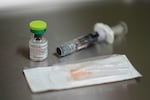
FILE - A vial of the measles, mumps and rubella (MMR) vaccine is pictured at International Community Health Services, Wednesday, Sept. 10, 2025, in Seattle.
Lindsey Wasson / AP
Most of these cases appear to be picked up locally, without a clear source.
Relatively few have been traced to Oregonians exposed to the virus in other states, where there are major outbreaks. The state also isn’t yet seeing much confirmed transmission in public places.
So far this year, Oregon has had no outbreaks, which are defined by three or more connected cases, involving more than a single household.
So far as we know, the virus has yet to land in a community with lots of unvaccinated children where it can spread freely. That’s what happened in Texas and South Carolina and drove major outbreaks there.
But unvaccinated and undervaccinated communities exist in Oregon, too, and with so many new exposures, it may just be a matter of time before that happens here.
The state is reporting lots of public exposure sites. People contagious with measles have been at grocery stores and restaurants. What gives?
The initial symptoms of measles are a cough, cold, red eyes, and a runny nose. In other words, they’re easily mistaken for something else. People are contagious while they have those early symptoms, which often occur for three or four days before they get a rash.
Then, they develop a distinctive rash that starts at the face and spreads down. It’s often that rash that prompts a measles diagnosis. So in short, it’s easy for people to spread measles without realizing it.
What makes it so contagious?
The virus can remain airborne for up to two hours after a person with measles coughs, meaning you can catch it without ever having been face-to-face with a person who has it. That’s quite a trick for a virus. Measles is widely considered to be the most contagious respiratory virus in the world.
I’m vaccinated. What’s my risk of getting measles now that it’s here in Oregon?
Low. A single dose of the measles vaccine, which was the standard recommendation until 1989, offers about 93% lifetime protection against measles. So if you’ve been in contact with somebody with measles, you have a roughly 7% chance of infection.
If you were born after 1989, the standard recommendation was for two doses of the shot. That boosts lifetime protection to 97% — so only a roughly 3% chance of infection if you’re exposed to the virus.
So the odds are low but not zero, and there are occasionally breakthrough cases. One of the cases reported this year in Oregon is a person who had received one dose of the vaccine. Breakthrough cases are typically more mild.
I’m not vaccinated. What’s my risk?
High. A person with the measles will infect nine out of ten people they come in contact with. So if you’ve been exposed to a contagious person, there’s a 90% chance you’ll get measles.
If you’re not vaccinated and you know you’ve been exposed, many people can still get vaccinated within 72 hours of exposure. The shot is still effective at preventing severe disease and even some milder infections if it’s given within that window.
However, the vaccine cannot be given to pregnant women or to infants under six months old. Those groups may be eligible to get an immune therapy, immunoglobulin. It works within six days of exposure.
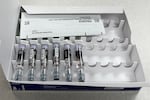
FILE - Priorix measles, mumps and rubella vaccines are prepared at Children's Minnesota on Nov. 20, 2025, in Minneapolis.
Devi Shastri / AP
How are Oregon’s vaccination rates?
About one in 15 kindergartners in Oregon haven’t received any dose of the measles vaccine. About one in 10 have only received one dose. But vaccination rates vary widely across the state. In specific communities and schools, the rates are much lower.
Experts say what matters most is the vaccination rate in your town, zip code, or neighborhood. Kindergarten vaccination rates are a pretty good indicator of that, since the recommended vaccine schedule is for kids to get two doses by the time they start school. OHA publishes the vaccination rates for individual schools in Oregon here.
How do we know the vaccine is that effective?
Measles shots have been around for more than 50 years. They’re still based on a strain of the virus that was collected from a child in 1954, and the modern version of the shot was developed in 1968. Hundreds of millions of people have received versions of the same shot since then and scientists have decades of data on the vaccine’s efficacy in the real world.
If I’m vaccinated, do I need a booster?
Probably not, even though people born before 1989 may have slightly less immunity than people born and vaccinated later.
Specifically, if you were born between 1967 and 1989, you likely only received a single dose of the shot. That offers about 93% lifetime protection, according to the CDC.
If you’re in a high risk profession where you could be exposed to measles often, like health care or teaching, you can ask a doctor to check your measles antibody levels, also known as titers, or you can get vaccinated again for extra protection.
And people vaccinated between 1963 and 1967 may have received a version of the vaccine that was much less effective, and should talk to their doctor.
For most vaccinated people, however, a booster probably isn’t necessary.
Measles, like all viruses, evolves over time. In fact, it’s an RNA virus, like COVID-19 or the flu, two viruses that have been very good at evolving to evade our immune system’s defenses, and as a result, require regular boosters.
But there are constraints on the evolution of measles that have made it a uniquely good target for a vaccine.
In short, the measles virus today is similar enough to the virus that was circulating in the 1950s that the original vaccine formulation gives us a similar level of protection. If you want to know more about why, the educational site “Understanding Evolution” has a great deep dive on what makes measles evolution different and the vaccine so effective.
People born before 1957 generally don’t need to be vaccinated because the presumption is that everyone born before the vaccine was developed had measles during childhood and has lifetime immunity.
What happens when you get measles? What makes it serious?
Measles is a mild infection for many people. During last year’s outbreak, about one in 10 reported cases required hospitalization.
It can be more serious in children under five years old. Their hospitalization rate last year was roughly one in every 5 reported cases. Many complications for children are manageable, including ear infections, croup, and diarrhea. As many as one in every 20 children that gets measles develops pneumonia. In rarer cases, it can cause life-threatening swelling in the brain.
About one in every 1,000 children who develop measles dies, which matches what’s been observed during the current U.S. outbreak. There were 2,213 reported cases last year and three pediatric deaths from measles or its complications.

FILE - Health department staff members enter the Andrews County Health Department measles clinic carrying doses of the measles, mumps and rubella vaccine, Tuesday, April 8, 2025, in Andrews, Texas.
Annie Rice / AP
Doctors say a few things make measles particularly bad. One is that it can cause profound illness and even death in previously healthy children.
A second is that new research suggests an infection with the measles virus affects a person’s immune memory, making them more susceptible to other infections for months afterwards.
Finally, in rare cases, measles can cause very serious complications involving the nervous system and brain.
One of these is an often-fatal syndrome that strikes children many years after they were originally infected with measles, called subacute sclerosing panencephalitis.
In 2015, a 14-year old boy in Oregon died from it. He’d been born in the Philippines and had contracted measles 10 years earlier, when he was a baby. He’d received one dose of the shot, but under circumstances that might have made it ineffective.
Another way to look at this question is through the lives saved by vaccination. Public health researchers estimate that between 1974 and 2004, as vaccination programs spread around the world, the measles vaccine helped avert the deaths of about 94 million children.
The measles shot caused a far greater reduction in infant and child mortality than any other vaccine. The original analysis was published in the The Lancet, a top medical journal, and there’s an easy to read breakdown of the findings related to measles here.