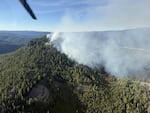
The Olive Butte Fire in Grant County, Oregon on July 9, 2026
Courtesy of the FireNet Resource Center
As of Monday night, no structures had been lost in Eastern Oregon after multiple wildfires broke out across Grant and Baker counties, according to officials.
Despite getting some relief Sunday to directly attack the Olive Butte Fire, evacuation orders remain in place Monday evening.
The small city of Granite in Eastern Oregon has received Level 3 — GO NOW evacuation orders, as the Olive Butte Fire grew to more than 1,700 acres. It’s one of several blazes currently active in Grant County. Granite, located in a remote corner of the county, has fewer than 100 residents.
Those evacuating can go to the Sumpter Community Center for resources and more information.
Another nearby blaze, the Salmon Fire, has burned more than 1,300 acres so far. More than 600 fire personnel are in the area working to contain the fires.
Fire officials said the Salmon Fire has moved into the North Fork John Day Wilderness area and into an existing burn scar. That, combined with the terrain, has made it difficult for firefighters to gain ground in the area.
“It’s been very dynamic for the past two days,” said Kurt Ranta, operations section chief, in a video update Sunday.
Gov. Tina Kotek invoked the Emergency Conflagration Act on Saturday night for the Salmon Fire and on Sunday night for the Olive Butte Fire, allowing more resources to be mobilized to fight the fires.
She has also invoked the act for the East Evans Creek Fire in Southern Oregon.
Fire officials have continued to warn that Oregon is at extreme risk for wildfires this summer, given the lack of snowfall and a persistent drought throughout most of the state.
Ranta noted in the Sunday update that Oregon’s low snowpack has left vegetation at higher elevations exposed to dry air for much longer than usual.
“All you need with that is a little bit of wind — wind is the driver here — you couple that with really dry fuels and you get fire that’s really difficult to catch," he said.
Ranta said the anticipated hotter and drier weather, with potential thunderstorms that could spark new blazes, is another challenge firefighters are anticipating. The response team has outstanding order for more resources to support their work in the area.
“There’s a pretty good chance of thunderstorms in the Tuesday, Wednesday time period,” Ranta said Monday. “So as you guys know that can bring potentially dry lightning. Even worse than that, if the lightning isn’t over us, we get flow outflow winds that can really push the fire any which way.”