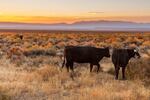
FILE: In this photo, provided by the BLM, cattle graze at sunset on open public rangeland in Malheur County, Oregon, on Oct. 17, 2017.
Greg ShineBLM / BLM
The Trump administration is rewriting Bureau of Land Management rules to increase the number of cattle and other livestock that can graze on public lands. The rules affect 155 million acres in the West, an area more than two-and-a-half times the size of Oregon.
The BLM says the proposal “reflects the Trump administration’s priority to reduce unnecessary regulatory burdens, promote productive working lands and strengthen local economies.”
But environmental groups have raised concerns about the effect loosening these rules would have on wildlife. Native American tribes that manage bison anticipate impacts on their herds as well. The public comment period on the proposal closed last week.
We talk with Propublica Mark Olalde about the plan and how it would affect ranching as well as wildlife and Indigenous tribes.
Note: The following transcript was transcribed using AI and validated for accuracy, readability and formatting by an OPB volunteer.
Jenn Chávez: This is Think Out Loud on OPB. I’m Jenn Chávez. The Trump administration is seeking to expand grazing by cattle and other livestock on public lands. This proposed rewrite of Bureau of Land Management grazing regulations would affect 155 million acres in the American West. The new rules would cut back public involvement in decision making and favor the livestock industry. That’s according to reporting by ProPublica and High Country News.
ProPublica reporter Mark Olalde has been paying close attention to public lands grazing in recent months and joins us now for an update. Mark, thank you for being here and welcome back to Think Out Loud.
Mark Olalde: It’s great to be here. Thanks so much.
Chávez: So, you joined us on OPB last year to talk about this collaborative investigation into grazing on public land that you were a part of by ProPublica and High Country News. And one thing you looked into is the environmental impact of grazing without proper oversight. So before we get into this new proposal to expand grazing further, how did you find that overgrazing has affected public lands in the West?
Olalde: Well, we found it by looking at the Bureau of Land Management’s own data. Their own land health assessments have found 38 million acres of degraded land around the West. It’s an area about half the size of New Mexico that had been overgrazed. And that’s after they acknowledged that they didn’t have the staff, the capacity and the time to analyze tens of millions of additional acres. So even according to the government itself, there’s just a huge piece of land in the West that could probably do with a little less livestock.
Chávez: Meanwhile, how have ranching and livestock industry groups argued to this administration that increasing grazing on public land is needed, as you report on in your most recent piece?
Olalde: Well, I don’t think they had to do a ton of convincing. One of Trump’s longtime allies is a staunch ranching advocate, comes from a ranching family herself, named Karen Budd-Falen, who’s one of the higher ups now in the Department of the Interior and had a role in writing these regulations. So, like in many industries, the regulations coming from the Trump administration have a role from industry themselves writing their own regs.
Chávez: What are the arguments that the folks in ranching and livestock made that this was needed for the health of their industry?
Olalde: So the last time that the Bureau of Land Management grazing rights were were really overhauled was 1995 during a Democratic administration, and that was coming off of a push by the environmental movement, this Cattle-Free by ‘93 slogan, this idea that we’ll get public lands clear of livestock grazing in the next few years. A few years after that, you get the new regulations, and since then the livestock industry has been saying, hey “these regs are just simply a product of that movement, these regs are really geared at just totally getting rid of livestock.”
Now that’s not true. There’s still a ton of livestock grazing around the West. But really their argument was we need flexibility in grazing management. Best practices have come a long way in the past 35 or so years, and so let’s really rethink and modernize the grazing regulations.
Chávez: And I know you also spoke to several current and former BLM employees, and from what I understand, they told you the new rules would bring some benefits. What did they say those were?
Olalde: There are absolutely some good things in this, some things that career staff at the BLM who have public lands’ interest at heart wrote. One of these things is this idea of the land health assessments that I spoke about at the top that are really a nuanced way of studying how an activity, a business, whatever it might be, impacts the lands. Those are just done in the livestock industry, they’re not done for the other public lands uses: timber, recreation, oil and gas, mining. And one of the things that these regulations do is expand that concept to other uses. Now that had already been expanded under the Biden administration, but then the Trump administration pulled that back, take that for what you will.
But there are some things that these new regulations do additionally and specifically to grazing to clean up some of the regulations, give more flexibility both to regulators as well as to ranchers, and really allow them to work a little bit more quickly and efficiently and collaboratively.
Chávez: You spoke a little bit to some of the folks who had a say in these regulations as they were being drafted. I want to ask about that specifically. Who did have a say, and maybe who did not have a say on these regulations as they were being pulled together?
Olalde: So some of the major industry trade groups representing ranchers, Public Lands Council, National Cattlemen’s Beef Association, they publicly celebrated the fact that they got face time in DC with Secretary of the Interior, Secretary of Agriculture in the spring, kind of as the draft of the regulations was being finalized. Environmentalists, Native American tribes who work on this or who have permits themselves are clearly being impacted. They were not, of course, invited to those types of meetings. You clearly see the administration’s priorities in who has a seat at the table. Public comment period just finished, so the public did have the chance to weigh in, but really not to the same degree of sitting in the room with a secretary.
Chávez: So, we put out a question to our listeners about this, about their take on expanding grazing on public lands. Over 40 people left us comments. Some people support the rules, like Jesse Laird who said, “We need more cattle on the range. More cattle equals more wildlife and wildfire threat reduction. This is a good plan.” Others objected to the rules, like DaleLynn Gardner, who wrote, “More cattle will worsen the impact on native species, which cattle are not.”
And I found it interesting that multiple people who we heard from, like Lynn Bury, brought up bison, which you write about in your story. Lynn said, “Cattle grazing, not overgrazing, can be good for the land. See the effects of bison on the prairie.” Now, grazing by bison has definitely been a part of this conversation. But as you wrote about, Native American tribes that manage bison herds are worried about the new regulations. What did you hear from them about that?
Olalde: So there is this fight going on in Montana right now over a conservation group called American Prairie that has been using a mix of public and private land, but including Bureau of Land Management livestock grazing permits, to get bison back on the land, to try to revitalize the ecosystem. And the Trump administration has just waged war on them. Karen Budd-Falen, who I mentioned earlier, had been part of that prior to joining the administration on the side of ranchers fighting against this conservation group.
Now in the new regulations, there’s this change in definition that sounds minor, but it defines livestock as needing to be “production oriented.” And really the consensus idea is, that is looking at these groups like American Prairie who aren’t necessarily in a business as we would think about it in terms of trying to produce livestock for meat. It is much more focused on the conservation side. Well, the problem is tribes are very much seeing themselves as collateral damage here, because there are a number of tribes that also have permits for grazing, and may be running bison herds for land restoration, to feed the tribe or to preserve cultural practices. They might not fit that strict definition of “production oriented” either, and there certainly is a lot of concern in Indian country about could they be collateral damage.
Chávez: And I know previously, there have been multiple opportunities along the way for the public to weigh in on the BLM’s decisions to allow grazing on public lands. So, not just in reference to these regulations, but any decision making that is made around this. And I think public input is a big part of this story and your reporting. Can you tell us how it is changing under these new rules?
Olalde: It’s really happening by committee. There’s just all these individual places where the process had transparency, had an ability to register as an interested party and make sure that you got information about new permits or permit renewals, those sorts of things sent to you, that are one by one being taken away via these new regulations. Again, there’s a slight definitional change saying that if you want to be listed as interested public, you need to have a “cognizable interest.” I asked the BLM what the heck they think cognizable means in this situation, they ignored me. But when I spoke to both former members of the BLM and conservationists, they’re all concerned that “cognizable” is going to be a catch-all term to say if you’re not a specific business interest here, you don’t get to have this kind of heightened level of access to the process, say in the process and notification about the process. And one BLM employee told me, and quoted in the story, they just said straightforward, they’re clearly trying to reduce involvement of anyone other than ranchers.
Chávez: And meanwhile, I just want to touch on one more thing. You heard about another change for when ranchers appeal some of these grazing decisions. I understand that will be handled differently as well. How so?
Olalde: Exactly. So previously, if there was an unfavorable ruling against a rancher – a permit renewal comes with the condition that you’re overgrazing, you need to take some some cattle off the land for the spring or whatever it might be – that they can appeal it, as they obviously should have the right to appeal it. But the change here is that simply the act of appealing that adverse decision automatically pauses it. So if the agency, which they don’t often do, came down on a rancher and said we need to change what you’re doing, that can, can automatically be paused until the appeal works its way through. But due to staffing, due to all sorts of other issues right now with the organization, it’s difficult to know how long that appeal would take. So it’s difficult to know how long before practices are changed.
Chávez: Well, Mark I know you and your team are gonna continue following this, and we will as well here at OPB. Thank you so much for your time unpacking some of your most recent reporting with us today.
Olalde: Absolutely. Thanks so much for your interest.
Chávez: You’re welcome. That was ProPublica reporter Mark Olalde. You can read his most recent reporting in the collaborative piece by ProPublica and High Country News.
At the end of today’s program, guest host Jenn Chavez and senior producer Allison Frost read some of your comments about the topics from recent shows.
“Think Out Loud®” broadcasts live at noon every day and rebroadcasts at 8 p.m.
If you’d like to comment on any of the topics in this show or suggest a topic of your own, please get in touch with us on Facebook, send an email to thinkoutloud@opb.org, or you can leave a voicemail for us at 503-293-1983.