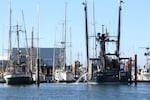
The Charleston Marina, shown here July 30, 2026, is Oregon's third largest fishing port, with 2020 landings valued at roughly $20 million.
Theo Greenly / JPR
A state report says President Donald Trump’s tariffs have hurt Oregon trade, but seafood processors on the South Coast say the effects on their industry are more complicated.
Oregon’s tariff analysis says the latest trade policies have disrupted exports and created uncertainty for businesses across the state. Oregon importers paid nearly $3 billion in tariffs between March and December 2025, while exports fell 17% over the year.
Lori Steele, executive director of the West Coast Seafood Processors Association, said tariffs are nothing new for the industry.
“There’s definitely concern about retaliatory tariffs, but these are coming in countries where we’ve been dealing with tariffs for a long time,” Steele said.
Steele described tariffs as a “mixed bag” for the industry. Companies trying to sell seafood overseas can face higher barriers, while processors focused on the domestic market could potentially benefit if tariffs make imported seafood more expensive compared with U.S.-caught products.
The effects also vary by company. Steele said many South Coast processors export less than some of the larger seafood companies elsewhere in Oregon, leaving them less exposed to changes in foreign markets.
Related: Rising fuel costs ripple through Northwest’s fishing industry
Steele said the latest tariffs are not among the biggest concerns for processors in the region. State environmental regulations, particularly wastewater requirements overseen by the Oregon Department of Environmental Quality, pose a more immediate challenge for many of the companies she represents.
Still, longstanding tariffs make it harder for some Oregon seafood products to compete overseas.
U.S. pink shrimp faces a 20% tariff when it enters the United Kingdom, and Oregon officials have been trying for years to get that duty reduced or suspended.
According to a March Oregon Department of Agriculture memo, the state applied to a U.K. tariff suspension program to eliminate duties on several seafood products.
The memo, written by ODA trade policy specialist Erick Garman, says those longstanding tariffs have significantly hurt Oregon seafood’s competitiveness in the U.K. market.
Those requests were not approved, but the state continues to pursue other tariff reductions.
Theo Greenly is a reporter with Jefferson Public Radio. This story comes to you from the Northwest News Network, a collaboration between public media organizations in Oregon and Washington.
It is part of OPB’s broader effort to ensure that everyone in our region has access to quality journalism that informs, entertains and enriches their lives. To learn more, visit our journalism partnerships page.