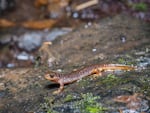
FILE - A provided image of a Columbia torrent salamander, photographed on Aug. 11, 2019.
Provided by C. Cousins/U.S. Fish and Wildlife Service
Environmental advocates are on track to get the Endangered Species Act protections they’ve been seeking for two semi-aquatic salamander species that live in humid forests in the Coast and Cascade mountain ranges of Oregon and Southwest Washington.
But a small ground-nesting bird that lives in both states will continue to be listed as threatened, the U.S. Fish and Wildlife Service said in a press release on Friday. That’s despite the Center for Biological Diversity’s push to classify it as endangered.
These decisions are the latest in a flurry of recommendations made over the past two weeks, largely in response to legal challenges to both Biden and Trump administration policies.
The streaked horned lark, the bird that will retain its “threatened” status, once lived in a vast stretch extending from southern British Columbia to southeastern Oregon. It’s now only found in a few areas of Oregon and Washington.
Advocates with the Center for Biological Diversity had sued over the horned lark’s threatened listing, arguing the bird should be deemed endangered, a status that comes with additional protections. A judge ordered Fish and Wildlife staff to take a second look, but the agency has now reaffirmed the bird’s less protected “threatened” status.
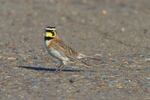
FILE - A provided image of a streaked horned lark, photographed on April 12, 2022.
Provided by Dave Leonard/U.S. Fish and Wildlife Service
The Center for Biological Diversity was more successful in its push to protect the Columbia and Cascade species of torrent salamanders, which it recommends listing as “threatened” for the first time.
“Increases in severe heat, drought, and wildfire in the species’ range, along with habitat loss and degradation, pose significant threats to both species,” the Fish and Wildlife Service said in a press release, adding that it recommends developing a detailed plan for protecting these threatened salamander populations.
Fish and Wildlife officials have made Endangered Species Act recommendations for a dozen species nationwide over the past two weeks, including for the Rio Grande shiner, a tiny freshwater fish from the Southwestern United States, as well as for the ciliate-leaf tickseed, a cousin to the sunflower that grows in wetlands of the Southeast.
On Nov. 19, the Fish and Wildlife Service also said the Mazama newt, which has nearly vanished from Crater Lake, should be considered endangered, in a decision that reverses earlier Trump administration arguments.