The Portland metro area has been experiencing more than two dozen hotter fall days a year over the past 50 years.
That’s according to a recent analysis from nonprofit Climate Central that found the region has already increased by 2.7 degrees Fahrenheit since 1970. That’s causing the Portland metro area to experience at least 18 more fall days with temperatures above the norm.
“People always say, ‘well, that doesn’t sound like too much warming’,” Climate Central’s scientist Kaitlyn Trudeau said, “but I just encourage people to think about when you get a fever and how just a small amount of increased temperature can actually like wreak havoc on your body, and it’s a very similar thing with the Earth.”
Climate Central has been analyzing the past 50 years’ worth of data on how climate change has impacted the nation.
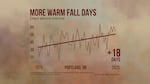
A recent Climate Central analysis found that Portland is experiencing more hotter fall days than the region did 50 years ago. The organization also said Portland's average temperatures have increased by 2.7 degrees Fahrenheit since 1970.
Climate Central / Climate Central
Trudeau said their data showed that every county across the contiguous U.S. has warmed since 1970, and it’s happening the fastest in the Southwest. That increase in temperatures is due to human-caused climate change and the continued burning of fossil fuels.
For Portland, these increases could have multiple impacts, she said, including energy affordability costs and a timing shift for certain agricultural products. It could also mean the spread of diseases like West Nile Virus through mosquitoes, as warmer temperatures are ideal for mosquitoes to hang around longer.
Climate Central’s findings are consistent with those of the latest Oregon Climate Assessment, a report published by Oregon State University compiled by more than 60 scientists and other experts.
Their report also found that rising temperatures, including more unseasonably warm fall and winter days, would have a range of effects, including the potential spread of diseases.
“Infectious diseases in Oregon’s animals will continue to evolve in the face of climate change,” the authors wrote. “There’s every reason to believe such diseases will significantly impact animals, human health, social and cultural values, and the economy.”
But the number one concern, Climate Central’s Trudeau said, is that 18 additional hotter days in the fall could be fatal for the most vulnerable residents.
“Heat is the number one weather-related killer in the United States and in most places around the world,” she said. “So it’s kind of underappreciated that high heat has a huge impact on our health, especially for people who are working outdoors, people who lack access to cooling, and people who already have some kind of health issues, people who are elderly and also younger kids.”
Portland is already among the fastest-warming cities in the nation. Eugene and Medford are also part of that list, according to Climate Central.
If trends continue, by mid-century Portland could experience about four days per year with temperatures reaching 100 degrees. That number would quadruple to 16 days per year by 2100.
The extension of hotter days into fall could also mean longer wildfire seasons, Trudeau said. Longer, hotter, drier and windier conditions stretching into fall could set the stage for more extreme fire behavior in the future.
Oregon is already battling one of the worst wildfire seasons as more than 2.5 million acres have burned across the state so far, with fire-related costs estimated at around $236.2 million as of Aug. 20.